



The Prophet's Corner

Welcome to The Prophet’s Corner

Here, you will find a curated collection devoted to the prophets of old and the prophets walking the earth today. These Spirit-led teachings and insights are crafted to support weary prophets—both seasoned and emerging—and to offer healing, clarity, and maturity to those who have felt misunderstood, rejected, or alone on their journey.

Each blog, story, video, and teaching is designed to bring illumination: to help you hear with deeper discernment, see with greater clarity, and recognize the profound ways the Holy One speaks through symbol, scripture, creation, and the stillness between breaths.

To those who wonder if they carry a prophetic calling, and to those who know it with certainty—I have written these messages for you. Even if you do not personally connect with every word, you may find that the insights are meant for a spouse, a child, a sibling, or a friend. Some writings may feel unusual, intense, or even strange to those unfamiliar with the prophetic path. But the prophet often walks between worlds, hearing and seeing what others overlook.

The expressions and mannerisms of the prophet are frequently convoluted. One moment, he may appear fragile or overwhelmed—like a deranged creature wrestling with heaven—and the next, he releases fragrant oracles that break open revelation. Prophets are often captivated by what others ignore: insects, birds, shadows, symbols, or a hidden stallion galloping inside a fire pit. They may discern an angelic figure tucked into the pattern of floral wallpaper or hear a word from above that only they can interpret.

To explain such things is to invite misunderstanding. To tell the world that God commanded one to build a city from pans, or to lie on one’s side for hundreds of days, is to risk being labeled unstable. Yet Jeremiah saw the branch of an almond tree. Ezekiel saw wheels full of eyes. Moses saw a burning bush that was not consumed. The prophets saw—and they spoke.

Prophets often know things they do not wish to know. They see perplexing images: a glowing coal, a winged creature, an army in the heavens. They carry an internal conversation with their Maker that continues even in rooms filled with people. They wrestle with scripture, with visions, with riddles unfolding before them in both dreams and daylight.

If this resonates with you, dear reader, I invite you to explore this section with an open heart. Feel free to write to me, share your journey, or seek clarity for your own calling. My hope—my prayer—is to help fellow prophets become whole, steady, and prepared to stand upon the watchtower, bringing forth the message entrusted to you by the Holy One for such a time as this.

Blessings,

Tekoa Manning

Table of Contents

Table of Contents

The Journey of the Prophet

To those who have wondered if they are a prophet, and to those who know with certainty, I have penned this message. To those who have no rough garments, this message may not be one for you, but it may be for your spouse, sibling, child, or friend. Parts of it may appear prideful, strange, or mentally unstable. But, to the prophets who are sons or daughters of prophets, or to the prophets who belt out in Amos fashion, “I was not a prophet, “nor was I the son of a prophet,” I pray it, ministers, to you as well. 

 A prophet is met with death in the womb or shortly after. It may be a breach, uterine rupture, or strangulation by cord. Either way, some form of difficulty usually occurs before birth or afterward. The prophet is at times unloved in the womb, rejected before even exiting the ramp. Once the prophet meets his assigned family, he never feels truly a part of it, although he does love them deeply, he is a misfit. The prophet, at any time, may abruptly be told to leave his family, homeland, or flee for his life. He is mostly without a mother or father, and even if found to be a goodly child by his mother, he is then hunted by an outside power, whether Pharaoh or Herod or some other demonic force.

“Take the child and his mother and escape to Egypt. Stay there until I tell you, for Herod is going to search for the child to kill him” (Matthew 2:13).

“If it is a son, then ye shall kill him” (Exodus 1:22).

Or, like Samuel, the prophet is given to the Father at an early age.

If the prophet’s father or mother favors him, then his siblings or in-laws are given the task of hating him for his dreams, mantle, or assignment. This starts at a relatively young age. Remember how mocking Ishmael was? He had to be sent away (Gen. 21:10)? Remember Abel’s blood that cries out? (Luke 11:50-51). Remember Laban and his sons? (Genesis 31:2-3). And who could forget Joseph and David’s journey?

 “Come now, let’s kill him and throw him into one of these cisterns and say that a ferocious animal devoured him. Then we’ll see what comes of his dreams” (Genesis 37:19-20). 

Symbolically, the prophet’s first mantle must be torn, coated in blood, and used to pronounce that he no longer lives, although he does. The prophet lives whether fleeing for his life or placed in an ark by the Nile, a pit, a prison, a cave, the backside of the desert–he lives

Like Joseph, his second mantle is torn from him by the harlot. He must have the ability to flee from the harlot that seduces the flesh and causes the immature prophets to prophesy smooth words, itching ear words, and from their own hearts. The third is a garment worn by prisoners, for the prophet must be anointed to set people free. The prophet will shed his coats until they are given the final anointing. Like a butterfly coming out of a cocoon, he is ready. The prophet then knows that it is time to do what he has been called to do.

At this point, the prophet is very seasoned. He knows how to survive the rejection and murderous spirit sent from an enemy, family members, friends, or those in positions of power or leadership. This crushing is for his well needed and causes him to run to His heavenly Father for comfort, approval, love, and acceptance. The prophet is thrust into the desert again and again, which causes him to listen more eagerly. To bend his ear towards the heavens and say, “here I am.” The prophet makes spaces and time for silence. He is often trying to drown out the world and hide from the people because it is in that space and time that he is fed bread and water. The prophet does not wear priestly garments.

False accusations and prison sentences are testing he endures in shackles–shackled to the Holy One who sees all. The prophet learns to praise and exalt His King amid hell. The prophet knows what is in man because he must look in the mirror a long time before he can bring his message from above. The prophet does not follow man–nor presidents, priests, or kings. He only follows the sound of his Father’s voice, and he only does what his Father tells him to do–except when he falters, and this is short lived because the weight and sorrow of letting the Holy one down is more than a child can bear.

“But Yeshua did not entrust himself to them, because he knew all men, And he did not need a man to testify to him about anyone, for he himself knew what was in a man.” (John 2:24-25).

The prophet is sold into slavery to store up bread or sent to free enslaved people, but not before enduring significant testing. Depending on his assignment, the prophet may be tested 40 years or longer depending on his stubbornness and trauma from the past. His life is a sacrifice. The prophet is often wrongfully accused– met with stoning and slander and at times by the members of his own household. And yet. . .

The prophet is a murderer.

Disclaimer: I do not condone murder or violence.   

  1. “Moses looked this way and that, and seeing no one, he struck down the Egyptian and hid him in the sand” (Exodus 2:12). 
  2. “David grabbed the Philistine’s sword and pulled it from its sheath and killed him, and he cut off his head with the sword” (1 Samuel 17:51).
  3. “David said, “Put Uriah at the front of the fiercest battle; then withdraw from him, so that he may be struck down and killed” (II Samuel 11:15).
  4. “And Elijah said to them, “Seize the prophets of Baal; let not one of them escape.” And they seized them. And Elijah brought them down to the brook Kishon and slaughtered them there” (I Kings 18:40). 
  5. Then he turned around, looked at them, and called down a curse on them in the name of the LORD. Suddenly two female bears came out of the woods and mauled forty-two of the young men. And Elisha went on to Mount Carmel, and from there, he returned to Samaria” (II Kings 2:24-25). 
  6. “But Samuel said, “As your sword has made women childless, so shall your mother be childless among women.” And Samuel hewed Agag to pieces before the LORD at Gilgal” (I Samuel 15:33).
  7. “Then Jehu will put to death whoever escapes the sword of Hazael, and Elisha will put to death whoever escapes the sword of Jehu” (I Kings 19:17).
  8. When Phinehas the son of Eleazar, son of Aaron, the priest, saw it, he rose and left the congregation and took a spear in his hand and went after the man of Israel into the chamber and pierced both of them, the man of Israel and the woman through her belly” (Numbers 25:7-8).
  9. “Elijah answered the captain, “If I am a man of God, may fire come down from heaven and consume you and your fifty men!” Then fire fell from heaven and consumed the captain and his men. At this, the king sent to Elijah, another captain with his fifty men. The captain said to him, “Man of God, this is what the king says, ‘Come down at once!'” “If I am a man of God,” Elijah replied, “may fire come down from heaven and consume you and your fifty men!” Then the fire of God fell from heaven and consumed him and his fifty men. So the king sent a third captain with his fifty men. This third captain went up and fell on his knees before Elijah. (II Kings 1:10-13).
  10. “When he came to Lehi, the Philistines came shouting to meet him. Then the Spirit of the Lord rushed upon him, and the ropes that were on his arms became as flax that has caught fire, and his bonds melted off his hands. And he found a fresh jawbone of a donkey, and put out his hand and took it, and with it he struck 1,000 men. And Samson said, “With the jawbone of a donkey, heaps upon heaps, with the jawbone of a donkey have I struck down a thousand men.” Judges 15:14-16). 

The prophet is heavy with the burden of Adonai and the burden of the people, and yet, he loves both more than his own life. The prophet never feels understood. A misfit from birth, he walks with a bull’s eyes or a target on his back. A true visionary, when called, does not wear a soft garment. He is not shaken easily, nor does he print business cards to announce his calling. He needs no live television network. No, word of the day, no prediction concerning the white house. He lives in widow’s houses, caves, the silence of the wilderness. He eats honey out of a lion carcass and locusts. The prophet eats the very things that destroy. Unclean birds and eagles feed him. The prophet can be found under a palm tree, on a hillside, in the house of a Shunammite, a fishing boat, a graveyard, or around a campfire. The prophet is not a jack in the box. Turn the handle and wait for him to pop up and tell you the future. The prophet speaks in parables. His messages at times require meditation and unraveling, but he is unaware that he speaks in mysteries. 

The prophet’s expressions and mannerisms are convoluted, and he is often misdiagnosed. A deranged suicidal creature one minute and a person speaking fragrant oracles the next. At times, he appears to be in another world. Captured by insects, birds, or seeing a hidden stallion galloping inside a fire pit or an angelic creature hidden in the print of floral wallpapering. The prophet is forever seeing riddles he must unravel. Or he hears from above, words that only he would understand. To tell the world he must build a city out of pans and lay on his side for hundreds of days would only get him a diagnosis of crazy.  Jeremiah saw the bud of an almond tree and it had a meaning no tree surgeon could understand. The prophet knows things he does not want to know. He sees perplexing images: a burning bush, an angelic army with swords, or winged creatures with many eyes. He often is perplexing over passages of scripture or dreams and visions that play out in front of him. An ongoing conversation is always present between the prophet and his Maker. These conversations linger in silence, even amongst friends and family. 

Yes, the prophet and his journey are unique. He is not holier, or better than anyone else in the body, but he is different.

The prophet is in high regard when someone requires keen vision, hearing, and unraveling riddles then quickly forgotten until the loss of a donkey, or when the results or outcome of a battle is needed. The prophet wrestles at night and walks with a limp during the day. The Prophet dies in his disease, although he raised the dead during his life.

“Now Elisha was fallen sick of his sickness whereof he was to die” (II Kings 13:14).

His disease is from years of battling, boxing, and fleeing afterward. PTSD is a standard way of life, but even his bones hold the power of resurrection.

“And as a man was being buried, behold, a marauding band was seen, and the man was thrown into the grave of Elisha, and as soon as the man touched the bones of Elisha, he revived and stood on his feet. (II Kings 13:21). 

Even in the bowels of Sheol, witches try to disturb the prophet from rest.

“And the woman said to Shaul: “I have seen gods coming up from the Earth!” And he said to her, “What is his appearance?” She said to him: “An old man came up, and he was clothed with a cloak.” And Shaul knew that it was Samuel, and he fell on his face on the ground, and he worshiped. And Shemueil said to Shaul: “Why have you disturbed me to bring me up?” (I Samuel 28:13-15).

The prophet is endowed with wisdom from on high and yet unable to express it adequately. He is often left stuttering and unable to articulate what he hears, sees, or reads. When the prophet must release the fire shut up in his bones, even he is terrorized by the words uttered from his own stale breath. Once he realizes the words he has spoken and the force and harshness of them, he again retreats to his cave, knowing he too is a man of flesh and not holy enough to speak such oracles.

“I have had enough, Lord,’ he said. ‘Take my life; I am no better than my ancestors.”

“Ah, Lord GOD! Behold, I do not know how to speak, for I am only a youth” (Jeremiah 1:6).

Then Moses answered, “But behold, they will not believe me or listen to my voice, for they will say, ‘The LORD did not appear to you.’” “Please, Lord, now send the message by whomever You will” (Exodus 4:1, 13).

The prophet warns year after year. Amid mocking and scorn, he rises in rough garments, knowing he can do nothing but what he was fashioned to do, and even if he tries to hide, he cannot for long. The sea will spit him up, or the very ones who wished to murder him will arise and beg for bread.

The prophet is alone in a room full of people, but never alone. Even if he mingles about, no one speaks his language, and he is often daydreaming. He has few things in common with most, yet he does try and appear normal. Although he may be laughing and full of mirth on occasion, his soul is usually screaming about an injustice.

The prophet has few friends, and if they do find a confidant, they too are marked and just as disfigured, and even in these friendships, there is a cost. Other friendships are strange bedfellows. People coming to inquire of things too lofty to dissect, then leaving for weeks or months until they need to seek him out again for counsel, dreams, or visions he may not have the correct answers for. A prophet May applaud you or embrace you. They may even love you from a distance but never with certainty. Knowing that some will betray them. They see both the holiness in others and the sin, but they see it in themselves first and they grieve over it. When the prophet detects and hears the specific name for the condition of some wounded soul, he is shown his past condition and punched in the gut at his past reflection. The prophet is a liar, a thief, a trickster, a botanist– an herbal specialist. He blurts out correct answers to fields and means so high above his pay grade or knowledge he knows it is not of him. He articulates and announces wisdom about matters he has no degree in. He often confounds the wise one minute and looks like a blabbering fool the next.

The prophet dies continually. He dies to relationships, love, material possessions, honor, respect, or accolades. He dies of being picked first for the team. He dies to assignments and circumstances that leave him looking like he is cursed by Adonai or, worse, a person who breaks Torah. His wife is barren or struck dead, or he’s told to marry a harlot, walk naked, lay on his side and take the sins of Israel and Judah, cook his food over human dung or that of a cow.  He is told to prophesy destruction in 40 days, knowing his words will fall to the ground for a season, and he will appear once again as false. He sits with lepers and women who have colorful past, drunkards, or tax collectors. He lives by brooks for years and allows unclean birds to feed him until the Holy One says it’s time for his next assignment. He tells parables to kings who take the head off, giants, without fear. Parables about their sins and proclaim, “You are the Man” when they vow to kill the main character of the parable.

The prophet is seen as a worm, a maggot, spit, the lowliest of all men, yet they are honored in death.

A prophet lives in solitude and occasionally exits from his cave, brook, or desert place and only long enough to do the assignment given by the Holy One or to attend schools of higher prophetic learning to work on hearing and obeying quicker. After each assignment, or dust settling, the prophet retreats back to a place of solitude. It is here that he is most content. At other times the prophet is a nomad. Transported on mountains, wandering in deserts, escaping death by an inch of his life.

The prophet is bitten by snakes, surrounded by lions, kissed on the cheek, swallowed by fish, chased by an army of 1,000’s and often charged with crimes his adversary committed. And even while sinking in cisterns of muck without bread or water, the prophet knows there is no one who can offer comfort or prayer. Even when the prophet requests prayer, he knows he may lose his head, be sawn in half, boiled in a pot, or shipped off to an island to finish the assignment left him.

To be a prophet means skin thick and calloused. The seasoned prophet has no fear of man, kings, or judges. He speaks all the words commanded for him to say, for if he doesn’t, he is warned, “Do not be intimidated by them, or I will terrify you before them.” Jeremiah 1:17.

After testing this, he never forgets the terror, and although he at times would like to be normal, even in trying to do secular occupations, the prophet is far away, and there is no desire in the task no matter the pay. Even with all his callousness, the prophet weeps over the widows, the orphans, and the poor. The prophet would give all his possessions to help the lowly but usually has none to give. The prophet cannot stand injustice or wrongdoing, nor can they tolerate falseness. Their message is repeated over and over again. It is the same message of Elijah, John, and Yeshua–a boisterous repent. Choose this day whom you will serve. Make straight your paths, and while the prophet is screaming this from his insides to everyone around him, he is a madman—a rough-mannered, sharp-edged, hairy garment sort of man. At other times, he is feeding widows, comforting broken women at wells, delivering demonized men from torment or tending sheep alone for so long, he wonders if he has failed in such a manner that the Holy One has left him.

Occasionally he is haunted by those who proclaim to wear rough garments, but he knows they speak peace when there is no peace. He knows they prophesy out of their own hearts, and due to their falseness, they will inherit leprosy like Gehazi. But the prophets who have aged and are no longer running to caves, hiding at the bottom of ships, or wearing mask or disguises, will offer guidance to the immature prophets in hopes that they will learn from them and not have to go through the crushing.

If this has ministered to you and you know some lonely prophets in need of understanding their role better in the body of Messiah, please feel free to share.

Blessings,

Tekoa Manning

Dead Flies, Honey Bees & Our Hearing


Dead Flies:

The first one concerns my father and mother; may their names be remembered as a blessing. My mother and father were Sunday morning church attendees; my father was an elder, missionary, and much more. In his older years, he played guitar and sang during worship. He was often called on to fix a sink or repair the AC at his assembly. My parents were faithful tithers. My mother, who had Parkinson’s in her later years, was still faithful to read her Bible and pray daily. One Sunday morning, the Pastor stood up and spoke with great power. My dad was so encouraged by his message. At the end of the message, the Pastor asked if anyone had any prayer needs. My mother, who had Lewy Body Dementia, which goes hand in hand with Parkinson’s, always requested the same thing week after week.

“Please pray for my legs they hurt awful and feel like they are on fire or being cut with a knife.”

The Pastor had prayed for my mother many times. However, before the whole congregation this Sunday, he said, “Vicky, you can take your legs home with you. We are tired of hearing it!”  The man who was to represent the Messiah was tired of hearing it. He insinuated my mother lacked faith and had sin in her life; whatever it was, he thought, his anger from possibly other pressures exploded on my sick mother in front of everyone.

Then, he continued taking prayer requests.

My father went home, put my mother to bed, and said, “Vicky, I’ll be right back. I have to take care of something.”

My dad rode back to the church and asked the Pastor if they could talk in his office. My father looked him in the eye and said, “This morning, you taught one of the most anointed messages I’ve ever heard. It ministered to me deeply, and then, in an instant, it was as if someone placed their hand on the commode and flushed the whole thing down the toilet. It did not mean a thing. It was waste,–garbage, refuse.  And you know why? Because of the way you spoke to my wife, who is suffering. You had no compassion or empathy, no mercy for her, no kind words or love, and you rebuked her for suffering in public. How is that like Messiah?

I have been coming to this church for years and have been faithful, but you are to never speak to my wife like that again, and you will openly apologize next Sunday for your words towards Vicky.”

My father got up and walked out of the office. Harper Valley P.T.A comes to mind. If you’re too young to get the comparison, you can listen to the song on YouTube.

“Dead flies make a perfumer’s oil stink, so a little foolishness is weightier than wisdom and honor.” Ecclesiastes. 10:1.

We’ve all had our moments of saying harmful things. We’ve all been guilty of placing flies in the anointing balm. My father was angry, but he had righteous anger, which still exists. My father covered his wife and placed a boundary. He brought correction to the Pastor.

Listen to the words the Pastor spoke: “Vicky, we are tired of HEARING it.” The problem was the way the Pastors ears were hearing, not my mother’s suffering and pain.

Dead flies and honeybees:


When I was 18, I lived off a military base because base housing was full. We lived in a trailer park with other military families. One day, as I was cleaning with the windows open and watching my eldest son, who was around one year old, a bee flew in my ear. It was buzzing in my ear canal. I grabbed my head and screamed, which caused my son to cry. I kept swatting my ear and slapping my head while screaming. I had no idea a bee had crawled in there until it started buzzing.

Finally, I ran to the kitchen sink and let water pour into my ear canal, and the bee flew away. My quick action had to be Yahweh giving me the wisdom to do this. It took me a minute to comfort my son and compose myself because not only was I a young woman, but I never dreamed that this type of thing could happen to a person. I was lucky because although I was smacking my ear and shaking my head for a bit, I was not stung.

However, today, as I type this message, spiritually, this might be what we need: a good ear full of bee venom. The National Library of Medicine states that bee venom is most helpful:

Bee venom (BV) consists of a mixture of substances, principally of proteins and peptides, including enzymes and other types of molecules in a very low concentration. Melittin and phospholipase A2 (PLA2) are Bee Venom’s most abundant and studied compounds. Literature on the main biological activities exerted by BV shows that most studies focus on the comprehension and test of anti-inflammatory effects and its mechanisms of action. Other properties such as antioxidant, antimicrobial, neuroprotective, or antitumor effects have also been assessed in vitro and in vivo.”

This month, we are to focus on hearing and our ears:

We have two ears and two kidneys. Hearing the most profound truth is attributed to the kidneys: “The Kidneys give advice” ( Chulin 11a). Ancient Chinese medicine also connects the kidneys with the ears and our hearing ability.

Our ears and our kidneys look very similar. Slice a kidney in half, and you get a picture of two ears.
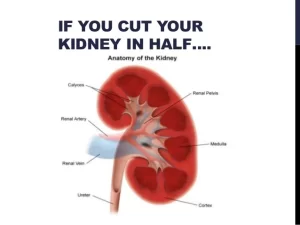
We hear, but we do not listen. We talk, but we do not choose our words carefully.

The prophet explains our condition: “You are near in their mouth but far from their kidneys” (Jeremiah 12:2 ISR). Our Bible translators have replaced the word kidney with rein or heart and often as inward parts, but kidneys were the original wording. It was the sweet fat of the sacrifices. Our kidneys purify us. They separate the good from the bad.

When studying the word bee, we learn that the prophetess and judge, Deborah, has a name identical to the word bee in Hebrew, which means word, logos, to speak or pronounce, and to prophesy. Like Moses, the people would come to her for guidance and seek counsel from her. She was the Buzz of the community or the queen bee.

Bees buzz. Flies buzz. There are many similarities to a bee and a fly. You might be surprised. Of course, house flies are scavengers and feed off rotten food and dead decaying things, but in the fly family, a few species are hard to tell apart from the honeybee. Hoverflies look like bees or wasps with their bright yellow and black stripes. Their larvae look like maggots, but these flies are beneficial.  They feed on nectar as adults and help control pests while pollinating flowers.

The Bible compares the Torah and books of wisdom to honey.

(Proverbs 16:24 )
“Pleasant words are a honeycomb,
Sweet to the soul and healing to the bones.”

“How sweet are Your words to my taste! Yes, sweeter than honey to my mouth!” (Psalm 119:103).

(Song of Solomon 5:1)

“I have come into my garden, my sister, my bride; I have gathered my myrrh along with my balsam. I have eaten my honeycomb and my honey;
I have drunk my wine and my milk.”

Many insects mirror bees’ appearance, behavior, flying action, and size. Wasps are the most obvious because of their black and yellow striped bodies and ability to cause a burning sting. Words can do the same thing? Sometimes our words sting others because we do not hear them correctly. Sometimes our ears need  (BV) Bee Venom.

We learned earlier that the anointing oil was spoiled because a fly got into the oil. Dead flies make the perfumer’s ointment give off a stench; so a little folly outweighs wisdom and honor. (Ecc 10:1).

A little folly. How much trouble can one get into by mixing a little folly—a little stupidity? A lot! And once it’s mixed in, everything is spoiled. Does this folly come from a lack of hearing?( Shema) Hearing and obedience. Who do we listen? Do we listen intently? Do we lack a keen ear for those we interact with daily?

 One Bible commentary stated that the flies mentioned in Ecclesiastes were poisonous in their bite or carried infection with them.

“Such insects corrupt anything they touch – food, ointment, whether they perish where they alight or not. They, as the Hebrew says, make to stink, make to ferment, the oil of the perfumer. The singular verb is here used with the plural subject to express the unity of the individuals, “flies” forming one complete idea. The Septuagint rendering omits one of the verbs: Σαμπιοῦσι σκευασίαν ἐλαίουἡδύσματος, “Corrupt a preparation of sweet ointment.” The point, of course, is the comparative insignificance of the cause which spoils a costly substance compounded with care and skill. Thus, little faults mar great characters and reputations. “A good name is better than precious ointment” (Ecclesiastes 7:1), but a good name is ruined by follies, and then it stinks in men’s nostrils.”

 We can easily cause a stink if not careful, and be so consumed with ourselves, we don’t even listen intently to others.

I’m paraphrasing an article I read at Abarim Publications which I will quote at the end of this blog. Flies focus on dead flesh and excrement, have no typical house, no common language, don’t care for their offspring, and don’t produce anything except rot and death. Bees focus on flowers and nectar, have a typical house and language, care for their offspring, produce honey, and help flowers reproduce.

“Flies don’t acknowledge any authority other than themselves, so the one and only Lord of the Fly (Ba’al-zebubor Beelzebub) is any fly’s own selfish self, and thus any fly’s private desire, will, and convictions. The one and only Lord of the Bee is the freedom that every individual bee has to have for any collective hive to come about and subsequently function.

Bees are essential to the global food chain and supply sustenance to a weary traveler who’s willing to brave their stings (Exodus 3:8, 1 Samuel 14:27). ” Click Here for more info.

I want to close this message by saying, Yes, Vicky, VICTORIOUS, Mary/Miriam, take your legs with you and your walk because your faithfulness and tears have been seen, and your legs continue on, even in pain and suffering. You have reaped a harvest, and your life continues, and your seed’s seed will blow shofars and wake the dead! I am my mothers daughter!

Hear, Oh, Israel! Rise up and stand like the army He created you to be. Oh, Daughters of Zion, oh, Abraham’s Seed, like Simeon who held the Messiah, carry Him with you and destroy the giants for they are FLIES!

Blessings, 

Tekoa Manning
The Potter's Wheel

The Potter's Wheel, The Journey of a Prophet

The Potter fashions what He desires. Our Father is the Potter and we are the clay. In order to fashion a prophet, the clay is often reworked, over, and over again.

If you were a God who wanted to wake people up, who would you send to do that job? John came as a voice. John was a High Priest and a prophet. Humble servants, teachers, and ministers of His Word are not just born equipped. They are thrown on His wheel.

Then I (Jeremiah) went down to the potter’s house, and there he was making something on the wheel. But the vessel that he was making of clay was spoiled in the hand of the potter; so he remade it into another vessel, as it pleased the potter to make” (Jeremiah 18:2-4.)

Soft clay can be smacked and thrown down on the potter’s wheel and reshaped. Once the pot is fired, we have a whole different story. The Holy One told Jeremiah that He knew him before He placed him in the womb and called him to be a prophet to the nations, but Jeremiah was built. If you are unsure of what I am trying to articulate, read Lamentations.

Jeremiah said, “Your mercies are made new each morning,” but what was the prophet saying before all this? He was talking to a people who had not been obedient and had gone whoring. 

Jeremiah may have been describing the curses that had overtaken God’s people due to their lack of keeping His Sabbaths and His Commandments.The prophet was weeping for the Bride.

The Book of Lamentations is read on the 9th of Av. It begins with the Hebrew word Eicha which means “how?” It is a prophetic response to the destruction of the temple in 586 B.C.E. We also our temples, that at times, must destruct so that the Creator can breathe new life into us.

“He has walled me in so I cannot escape; he has weighed me down with chains. Even when I call out or cry for help, he shuts out my prayer. He has barred my way with blocks of stone; he has made my paths crooked.

 Like a bear lying in wait, like a lion in hiding, he dragged me from the path and mangled me, and left me without help. He drew his bow and made me the target for his arrows.

 He pierced my heart with arrows from his quiver. I became the laughingstock of all my people; they mock me in song all day long. He has filled me with bitter herbs and given me gall to drink.

He has broken my teeth with gravel; he has trampled me in the dust. I have been deprived of peace; I have forgotten what prosperity is” (Lamentations 3:8-17).

Jeremiah felt all the grief and suffering of his condition and position as God’s mouthpiece.

Who is man to think that he is the one who can form the clay?

“Will the pot contend with the potter or the earthenware with the hand that shapes it? Will the clay ask the potter what he is making? or his handiwork say to him, “You have no skill”? (Isaiah 45:9, NEB)  

Our Jesus/ Yeshua was placed on that wheel.

“Although He was a Son, He learned obedience from the things which He suffered” (Hebrews 5:8).

Prophets are thrown on the potter’s wheel. Prophets usually have not met anyone they cannot relate to. Most of them have been through just about everything you can think of.

Elijah is called the Tishbite.  A place of that name lay within the boundaries of Naphtali. He boldly confronts kings and commands the sky to stay shut, and slaughters 450 false prophets of Baal. How does one get such tenacity? Not by being pampered and coddled.

Prophets were fearful of the call.


The prophets said things like, “I can’t speak. I’m too young. I am the least in my Father’s house. I am a fig farmer. I stutter.” They knew where prophets went. It was usually to oppose a priest—a king—a wicked leader with a booming voice from the Holy One and then off to the prison, death, a cave, a lion’s den, a head on a platter. They were built to confront those no one else wanted to confront. A stiff-necked people. An Ahab. A Jezebel. A Saul who had not slain the wicked king he was ordered to kill.

The Father speaks: Tell my servant David, who carried a giant’s head on a pole, that he is the man full of sin, Nathan.

Fast for 40 days and climb a mountain only to go back again because the people have been in idolatry and have been worshiping a calf and cry out for me to spare those same people who said, “Where is this Moses?”

Yes, this Moses, whose staff parted the sea. This Moses who cried out for their very lives. This Moses, who was fashioned in the desert away from his family and home on the Potter’s wheel.

person standing in front of mountain

The burden of the word of the Lord Adonai—that’s how the prophets began their letters. It is a burden to feel what the Father feels. It is a burden to see what the Father sees.

How do you build a man or woman with no regard for whether people will like the sound of the words they use? How do you build a person who doesn’t care if you never speak to them again? Possibly the Potter wants such a person to be shunned by those esteemed. The ones in the critical circles.

How does the Holy One build and shape a vessel that will speak what He tells them to speak even if their closest friends and companions walk away? You cause them to be loved by people they love with so much love it bubbles up inside their soul, and then you have those same people reject them, crush them, defame their character, and trust.

You bring people across their path that are so precious to them, and you turn those same confidants into barking dogs that bite and snarl and growl at the messenger or give them a Judas kiss.

The elite looked for ways to catch Yeshua in sin. They watched him like a spider. They accused him of casting out demons by the prince of demons.

“They watched him closely in an effort to trap him in something he might say” (Luke 11:54 ISV).

“But Jesus, on His part, was not entrusting Himself to them, for He knew all men, and because He did not need anyone to testify concerning man, for He Himself knew what was in man” (John 2:23-24 NASB).

How do you build someone that has no concern for money? No regard for titles? No affection for the esteem of man? You strip them of everything they own. You cause them to live by a brook and let ravens feed them. You send them to a widow with a few drops of oil and a handful of flour.

You leave them naked and bare, and they see all the material as refuse worthless.

True Prophets cannot be bought—they have their eyes on a different prize. The apostles could not be bought. Saints do not look to store up treasures here that can bring no joy. Junk, you have to dust and worry about thieves stealing. Titles that only bring esteem from men.

How do you build a person who has more compassion for the sick than most? A person who will fast and pray and believe with someone suffering horribly? You give them sores all over their body as they scrape the discharge with some broken pottery. You blind them for three days. You give them a thorn in their flesh, a hip out of socket, a barren womb, and a taste of suffering that most cannot imagine

How do you build someone with grief for sin that causes them to weep when they see things out of order?

Most of the people I know who have been forgiven much, love much.  When we see men and women lusting after fleshpots that we used to partake of, and our heart doesn’t want to point a finger but instead grabs a cloak and covers their nakedness and cry out for their soul to be healed.

Moses looked at his sister, who had slandered him, and “Moses cried out to the LORD, saying, “O God, heal her, I pray!” (Numbers 12:13 NASB).

Awe, the Potter’s wheel.

When the Father speaks to me and humbles me, it is usually through people that I overlooked or thought “unimportant,” A person I judged by their titles or lack of them. Have you ever had the Father make you feel the way Jeremiah felt above?

Jeremiah said he was made a laughing stock—mocked.

How do you make a marriage become so one in the Spirit that you both think and act and speak the same? Most every night, my husband prays with me—many mornings as well, but at night he lays his hand on my stomach that refuses to work in divine order due to gastroparesis, and he speaks life over it.

He watches it blow up like a balloon, and he sees my tears, and with those same tears he knocks, he asks, he is persistent like the widow who went before the unjust judge, and like Moses, he cries, “Heal my wife!” One night as he prayed, I thought of all the healthy and unhealthy wives who had never heard such compassion from their husbands.

I thought about how loved I am. How our very marriage has been placed on the Potter’s wheel for such a time as this, and every trial, every valley of darkness has brought us closer. For some, it causes bitterness and division. My husband waited twelve years for me. Every year he prayed for a wife and waited.

He went on a few dates because he did not feel they were the ones. In the twelfth year, a woman at his assembly said, “Jeff the Father just showed me a field with beautiful flowers and there the sun was shining down on a blondish brown haired woman that the Father is “molding” for you.” Eve or Chavah was fashioned and constructed from the side of Adam. The Father was shaping me into a wife for my husband.

“So with the potter sitting at his laborrevolving the wheel with his feet. He is always concerned for his products and turns them out in quantity.

With his hands, he molds the clay, and with his feetsoftens it. His care is for proper coloring, and he keeps watch on the fire of his kiln.” The Wisdom Books 38:29-30. NAB.


How do you give someone great compassion and empathy for those with disease, those with disabilities, children with autism or learning difficulties? You give them the same situations.

The Holy One is shaping us into the right vessel for His use. It hurts at times to be smashed and remolded into shape, thrown on the wheel, and placed into a fiery pit, but in the end, He will fashion us into a vessel He sees fit to use.

“But now, Hashem, Thou art Avinu (Our Father); we are the chomer (clay), and Thou, Yotzreinu (our Potter, Maker, Creator); and we all are the ma’aseh (work) of Thy yad (hand.)” Isaiah 64:8 OJB.”


Beware

Knowledge puffs up. We can have great knowledge and lack humility.
I remember a time, when every time I read the Bible, it was predominantly to hear from Him— My Savior, my Redeemer—the glory and lifter of my head. It was personal. It was first love. A time Before Strong’s Concordance was labeled trash, and we needed to dissect every word to get to the Hebrew root of its meaning and learn how Nouns have two genders: masculine and feminine—how changes in the vowels or their omission affect word meaning and on it goes. And STILL, there are so-called “experts” in this who are harming the flock. There are others who are preparing feasts for the sheep, and I am thankful for them.

But I must ask, “Do you remember a time before we needed history lessons in 1st-century biblical studies? Before, We needed lessons in idioms and the correct verbiage. Before, everyone fought over the exact birth date of the Messiah but didn’t skip the celebration?” Yes, a time Before we realized we had been duped and lied to. Before researching everything pagan and everything not pagan by every person who claimed to be a pagan expert.

A time before everyone was trying to learn who spells and pronounces the Messiah’s name and His Fathers correctly. A time when we just called Him, Father. Our Father who is in heaven. Hallowed be Your Name!

A time when you could discuss a passage with a friend and have joy and more reverence for the Holy One without an argument or shame, guilt, and condemnation or a feeling of “ I don’t know enough.”

A time when you could say, “ Abba, I know the plans you have for me, plans to not harm me but to give me a hope and a future.” And not worry about asking who the passage was written to or how 70 years in Babylon would happen. But reading it and believing it for us, when we were suffering and needed hope. No hermeneutics. No exegesis. No context. No contest on who’s right or wrong— smarter than.

It was a time when the Good News wasn’t about who had the greatest knowledge; it was a simple time when it was more personal. WE ALL NEED KNOWLEDGE. We are destroyed for lack of knowledge, but knowledge with arrogance and Bible slapping is just arrogance. It has no power or substance and the amount of information coming at us is overwhelming. We should read the words in red again. We need to surrender! Jeff Brown said it best:

Yeshua said, “Beware of wolves in sheep’s clothing.” “Beware” suggests the wolves are not easy to spot. Our adversaries often come to us as angels or messengers of light. Today, cliques are growing. Wolf packs are growing.”

As an author and a teacher, I will be judged more harshly—as i should be. Teachers are picked apart and dissected as some people today jump from one teacher to another, looking for who has the most extraordinary knowledge that wows. Who has the absolute truth. The apostle Paul referred to these men as “ super apostles.”

Mentorship is dying. No one needs one. And with one man or woman in control, sheep suffer. Congregations grow until one man can no longer juggle or spin plates fast enough because one man was never created to carry the whole load. Hello Moses, this is Jethro speaking.

“Ain’t you tired, Miss Hilly?”

I’m tired. 

Tired. Over-saturated. Over stimulated. Over-extended, and this is not a good place for an author with a new release, knowing that I am a part of the research club. Perhaps with a different agenda, but most surely trying to bring correction. 

My husband and I know our roles in the Body. This is the house Yeshua is building—preparing. It’s His House. We are given roles—He gave gifts and roles to men —all men! ( see Ephesians 4). Yeshua has prepared a place for You! Messiah in us is the hope of glory. Stand at your posts. Walk in your authority with love and humility—being Spirit led and filled with the Spirit of the LIVING GOD.

 A body sick doesn’t always have to do with physical health. The prophets warned of a body sick from the top of the head to the soles of the feet. The Body of Messiah has been rearranged. The head, the Chief Cornerstone, must be reinstated as King. May it be a time of many growing in love instead of waxing colder. Oh, how the world is crying out and the cry grows louder and louder. I encourage you today to take time to shut out the noise and sit in the stillness of the morning for THE FIRST TIME. Read His Word for the first time. See His Creation for the first time. Share a meal at His Table FOR THE FIRST TIME.

Blessings,

Tekoa

Get Bundle Deals Here


Jacob's Well, Joseph's Bones & A Samaritan Woman

What does old rags, Joseph’s bones, and a woman at a well have in common?

Many of us have imagined the woman at the well—tired, hot, with greying dark hair and etched lines around her mouth and eyes, stooping over to draw water. This story has been told in various ways, often lacking detail. Sometimes, it has been misrepresented.

The woman at the well has been accused of being a harlot with five husbands. Fictional narratives have added a backdrop suggesting that she came to fetch water at an odd hour to avoid the scornful whispers of other women about her “tainted” reputation. It’s time to erase these distorted stories and start anew. 

While the primary focus has often been on the woman, “the WELL” itself is crucial and is often a focal point throughout the Bible. Yeshua sits at Jacob’s well when the woman approaches to draw water. She later expresses her desire for the living water He offers, saying, “Give me this water so I won’t have to come here every day and carry this heavy water pot.”

She is parched—empty, like a cistern in a desert wasteland. 

My favorite song about the woman at the well is called “Waterpot,” and I hope you will listen after reading. I warn you, it’s addictive and can bring forth many tears—good tears. 

HERE

In Jeremiah 38, the humble prophet is thrown into a cistern and begins to sink into the mud. Picture a thin, frail man with collarbones jutting out. Jeremiah is deep inside a well filled with muck. He has descended a set of winding stairs, which are said to be at least 25 feet deep, into this dark hole. Beaten and mocked, he now finds himself sinking into the sludge. Where is his God?

“While the king was sitting at the Gate of Benjamin, Ebed-Melech, a counselor and servant to the king, approached him and said, “My lord the king, these men have acted wickedly in all they have done to Jeremiah the prophet. They have thrown him into the cistern, where he will starve to death, as there is no more bread in the city.”

They believed the cistern was full of water and that Jeremiah would drown and die. However, instead of water, it was filled with mud.

The prophet feels and experiences what Adonai has spoken concerning His people, Israel. 

In Jeremiah two, He prophesies what he will have to live out and feel first hand. This is the life of a prophet:

“For My people have committed two evils: They have forsaken Me, the fountain of living water, and they have dug their own cisterns—broken cisterns that cannot hold water” (Jeremiah 2:13).

It takes thirty men to bring Jeremiah up out of the well. The number thirty (shloshim) represents maturity for official ministry or service, the price of a bond servant, and the time of mourning for a life. (Grace in Torah, Numbers).

Then, Ebed-Melech took the men with him and went to the king’s palace, to a place below the storehouse. From there, he collected old rags and worn-out clothes and lowered them with ropes to Jeremiah in the cistern.

The man Ebed-Melech, whose name means “servant to the king,” tells Jeremiah to place the worn-out rags and clothes under his arms to pad the ropes. Without the padding, the ropes would cut into his thin underarms. At that moment, Jeremiah is nothing but bones—30 men using discarded rags— likely discarded clothing of the men who had died in that cistern.

Previously, Jeremiah had pleaded for his life and reminded the king of what the false prophets had told him. Jeremiah then asked, “Where now are your prophets who prophesied to you, saying, ‘The king of Babylon will not come against you or this land?’”

But let’s get back to the Samaritan woman…

Can you imagine the struggle of traveling to a well, waiting desperately for a drop of water in a drought? Each day feels weary, longing for the cool relief until your belly is bloated, yet the supply is scarce. This imagery parallels our spiritual thirst and the one who restores our souls. Water is more precious than gold, but our thirst can feel overwhelming…our tongues can be as parched as a cardboard box.

“Now Jacob’s well was there. So Yeshua, exhausted from the journey, was sitting by the well. It was midday. A Samaritan woman comes to draw water. “Give me a drink,” Yeshua tells her,” (John 4:7-8, TLV).

Moses, too, sat by a well, helping Jethro’s daughters. Abraham’s servant found Rebecca at a well, seeking a bride for his master.

In Genesis 21, Hagar, lost and without water for her son, was directed by God to a well. “Then God opened her eyes, and she saw a well of water.” Yahweh knows where all the water is, providing an unlimited supply even in bleak circumstances.

The story begins with Yeshua telling his disciples that he must go to Samaria, despite the fact that Jews generally despise Samaritans. However, Shechem is one of the cities of refuge. If a man accidentally kills someone, Shechem offers a safe haven for him. (See Joshua 21:20-). 

Yeshua is at a sacred place and knows everything about the woman at the well. He is aware of all her suffering, the paths she has walked, her tears, and her journey. Her womb has never been filled with life or water. In John 4, the woman tells her townspeople, “Come, see a man who told me everything I ever did.” The Messiah touched a profound part of her soul.

In Genesis 37:23-28, Joseph is thrown into a dry well, now his bones rest by Yeshua and this woman.

When Joseph came to his brothers, they stripped him of his robe—the robe of many colors he was wearing—and threw him into an empty pit with no water in it. As they sat down to eat a meal, they looked up and saw a caravan of Ishmaelites coming from Gilead. Their camels were carrying spices, balm, and myrrh on their way to Egypt. Judah then said to his brothers, “What profit will we gain if we kill our brother and cover up his blood? Come, let us sell him to the Ishmaelites and not lay a hand on him; after all, he is our brother, our own flesh.” So they agreed. When the Midianite traders passed by, his brothers pulled Joseph out of the pit and sold him for twenty shekels of silver to the Ishmaelites, who took him to Egypt.

It took thirty men in tattered clothes to bring forth Jeremiah, while it took twenty shekels of silver for the Ishmaelites, descendants of the young boy Ishmael, to purchase Joseph. Joseph’s royal robes were stripped away, dipped in blood, and deceitfully used.

Ishmael’s mother, Hagar, once found herself in the desert with an empty water skin, scared and alone, giving up hope. If we look closely, we can see that all these stories are woven together in a rich tapestry, symbolizing water and the thirst for life.

The woman at the well chooses not to tell Yeshua her story—He tells her instead. He knows her and finds her worthy of living water and salvation.

“So He came to a town of Samaria called Sychar, near the plot of ground that Jacob had given to his son Joseph. Since Jacob’s well was there, Jesus, weary from His journey, sat down by the well. It was about the sixth hour (noon)” (John 4:4-6).

The woman has suffered dramatically. She may have had five husbands because none wanted her due to her barrenness, age, or perhaps several had died. At that time, women could not write a divorce certificate to divorce their husbands. We can recall Tamar; her first husband was wicked and died, and her second husband refused to be a kinsman redeemer to carry on his brother’s seed, leading to his death as well since God was not pleased. Now she was to be given to the third son. This highlights how easily a woman could have had many husbands. The woman at the well is living with possibly a family member who has taken her in as a kinsman redeemer.

The time of day when this woman went to the well is often misinterpreted as a sign of her being an outcast. In reality, she might have been quite the opposite. To attract many in her town to listen to her words and her prophetic declaration that the Messiah had come, she would have needed to be a woman of valor and possibly a prophetess.

When the disciples saw Yeshua speaking with the woman, they were shocked. In that time, men did not carry on conversations with women, especially not with a Samaritan who was alone. Just then, His disciples returned and were surprised to find Him speaking with her. However, no one asked Him, “What do You want from her?” or “Why are You talking with her?”

The woman left her water jar, went back into the town, and said to the people, “Come, see a man who told me everything I ever did. Could this be the Christ?” So they left the town and made their way toward Jesus/Yeshua (John 4:28-30).

We now read the story of the first apostle, a woman. She was not a harlot; she had a respected voice in her community; and she was knowledgeable about the Torah and familiar with the Jewish Messiah who was to come.

When Yeshua revealed her personal life to her, she recognized Him as a prophet, saying, “I see, You are a prophet.” Though her people had rejected the prophets in the past, she understood what a prophet was.

Let us shed our old rags and dirty garments and sit at the well with Jacob, Joseph, Joshua, and Yeshua Messiah. Together, we can witness a woman so filled with joy and so unconcerned about a physical well or her water pot that she runs to tell her people—all who will listen—about the man who told her everything she had ever done.

If you enjoyed this blog, you might like my devotionals!

You can find them HERE and HERE. Buy directly from me and get a discount on bundle deals HERE


Our shop is open. Get beautiful gift boxes HERE

Joseph’s Four Coats and David’s Anointings


The journey of the School of the Prophet is symbolized by Joseph’s four coats and David’s three anointings, representing key stages of transformation. Both figures illustrate a pattern of growth, hardship, and preparation that can guide our own personal development and leadership readiness.

Joseph wore a bloody coat, a servant’s coat, a warden’s coat, and a royal robe. As we navigate life, how many coats or shoes do we exchange? Just as Joseph changed, we adapt our situations—switching from flip-flops to work shoes and from shoulder bags to diaper bags. Often, our most profound transformations occur during our most challenging times.

The ultimate goal is to emerge refined like gold, as expressed in Proverbs 27:21: “The crucible is for silver and the furnace for gold.” Likewise, Psalm 66:10 states, “For You, O God, have tested us; You have refined us like silver.”

Joseph and David each faced trials that shaped their leadership. David was anointed three times, and each anointing increased his authority, similar to how each of Joseph’s coats represented a new phase of learning and testing.

David’s first anointing exemplifies this: “So Jesse sent for his youngest son… And the LORD said, ‘Rise and anoint him, for he is the one’” (1 Samuel 16:12-13, BSB). By studying their experiences, we can better understand our own journeys of transformation.

The Holy Spirit rushed upon David, anointing him by Adonai in front of his family. After years of being hunted by King Saul, David was told to go to Hebron, where he received his second anointing.

**David’s Second Anointing:** “Then the men of Judah came to Hebron, and there they anointed David king over the house of Judah” (II Samuel 2:4). This anointing symbolized acceptance.

David’s third anointing represented the Messiah. At 30 years old, he became king, paralleling Yeshua, who began His ministry at the same age. Like Joseph, who was made governor at 30, these milestones emphasize their significance.

David started as a shepherd, and Yeshua is the Chief Shepherd. Some scholars note that Yeshua died 1,000 years after David, aligning with the idea that a day to the Lord is like a thousand years. Both David and Yeshua embody the roles of prophet, priest, and king.

**David’s Third Anointing:** “So all the elders of Israel came to the king at Hebron… David was thirty years old when he became king, and he reigned for forty years” (II Samuel 5:3-4). This also reflects Yeshua’s crucifixion at 33 and suggests a connection to the tribulation and the Messianic Kingdom.

After David’s first anointing, jealousy arose in his family. His older brother Eliab accused him of pride and envy when David questioned Goliath’s defiance: “Who is this uncircumcised Philistine?” (I Samuel 17:26-28). Eliab’s jealousy stemmed from knowing David was anointed by Samuel.

David received his first royal garments when Jonathan, representing Adonai, made a covenant with him: “Jonathan removed the robe he was wearing and gave it to David” (I Samuel 18:3). This signifies the passing down of kingship, as Jonathan means “YHVH has given.”

David’s success in battle led to his rising status, and Saul appointed him over the army: “David marched out and prospered… This was pleasing in the sight of all the people” (I Samuel 18:4-5). Ultimately, David was anointed after protecting his father’s sheep and defeated Goliath with a slingshot and five stones, symbolizing the battles we all face.

After David is tested with the opportunity to destroy his enemy, King Saul, he chooses not to harm the one who was anointed before him. After Saul and his sons are slain in battle, David only mentions the good Saul did, overlooking the bad. Now, David is prepared for his second anointing, followed by a third. It has been about 15 years since his first anointing. During this waiting period, David continues to work, writing the majority of the Psalms and defeating his enemies while taking wives.

According to (Horiyot 11b), all High Priests were anointed, but a king was only anointed if he began a new dynasty or if there was some controversy surrounding his appointment.

It is important to note that while oil is traditionally used to anoint people for greatness, the Torah (the first five books of Moses) sometimes uses the term “mashach” (to anoint) to simply mean the appointment to a high position, without the use of oil.

For example, in 1 Kings 19:16,19, Elijah appoints Elisha as his successor, and Isaiah 61:1 uses the term “the anointed one” (mashiach/messiah) to refer to anyone assigned to carry out an important task (Aish.com). Elijah passed his mantle down to Elisha.

The prophets had their own robes that represented beauty and authority, distinct from those of the priests. This brings to mind Joseph’s coats, symbolizing the prophets’ journey.

Joseph, like David, is anointed; his father, Jacob, gives him a colorful prophetic coat. After receiving the coat, Joseph begins to have vivid dreams. This leads to hatred from his brothers and suspicion from his father. To my readers: your anointing may first be challenged by those closest to you—family and friends.

Joseph’s first coat:

“Now Israel loved Joseph more than his other sons because Joseph had been born to him in his old age; so he made him a robe of many colors” (Genesis 37:3).

Joseph’s struggle with his family:

His brothers saw that their father loved him more and therefore hated him, unable to speak to him kindly (Genesis 37:4).

This hatred may stem not just from jealousy over a parent’s love for the young prophet but can also arise from various sources, such as jealousy over a romantic partner or sibling rivalries, reminiscent of Cain and Esau. Such conflicts might also arise from a parent who is envious of their own child or son-in-law.

“Then Joseph had a dream, and when he told it to his brothers, they hated him even more.” This season illustrates the young prophet experiencing the gift of a Seer while facing intense jealousy and envy, much as David encountered anger and jealousy from his own brothers regarding his victories.

In the narrative, we see Joseph wandering in the valley of Hebron, which later becomes the capital of David’s kingdom (2 Samuel 2:1).

Joseph, too, was roaming in Hebron. “Then Israel told him, ‘Go now and see how your brothers and the flocks are faring, and bring word back to me.’ So he sent him off from the Valley of Hebron. When Joseph arrived in Shechem (meaning “shoulder” or “ridge”), a man found him wandering in the field and asked, ‘What are you looking for?’ ‘I am looking for my brothers. Can you tell me where they are pasturing their flocks?’ ‘They have moved on from here,’ the man answered. ‘I heard them say, “Let us go to Dothan.”’ So Joseph set out after his brothers and found them at Dothan.” Dothan means “two cisterns” or “two wells.”

Today, Joseph is searching for his brother, Judah, and learning from his big brother, while Judah begins to recognize the Messiah as Joseph unveils his identity. One day, we will all gather at that table, eating and drinking—echad (One). But for now, in our story, Joseph, the prophet, is wandering around looking for his brothers.

The prophet must seek those who are also seers and gather, just as they did at the School of the Prophets that Samuel established. However, the first assignment given to the prophet often involves their own family.

Pay close attention, young prophets, apostles, teachers, and leaders. After receiving favor from Abba Father (Israel) and the coat of many colors, intense hatred arises. As the gifts are revealed, the animosity intensifies.

Joseph is searching for his brothers, who wish to thwart his assignment, seeking to destroy his dreams and even his life.

David, too, laments that his enemies hate him without cause, and that they are more numerous than the hairs on his head. This illustrates the jealousy and envy that Joseph must endure over his mantle. It also foreshadows the long journey ahead for David, who runs for his life and even pretends to be mad at one point.

The city of Dothan is mentioned again during the kingdom years as the hometown of Elisha the prophet (2 Kings 6:13). “Now Joseph’s brothers saw him in the distance, and before he arrived, they plotted to kill him. ‘Here comes that dreamer!’ they said to one another.”

As we progress through the story, we see that after the giving of the mantle, the anointing, and the bestowal of spiritual gifts, we encounter jealousy and hatred so intense that it leads Joseph’s brothers to throw him into a pit and contemplate murder. Both the young prophet Joseph and the older prophet experience this animosity in significant ways. When Joseph’s coat is presented to his father, stained with the blood of a goat, Jacob concludes that a vicious animal has attacked Joseph—demonstrating how their wild, beastly nature has overtaken them. The goat used to dip Joseph’s mantle in blood is notable.

The prophet often becomes the scapegoat within the family. Those with prophetic gifts can cause other family members to confront their own reflections, acknowledging their faults and injustices. The scapegoat is usually the one who sees the areas within the family that require correction, healing, and sanctification. However, many individuals dislike looking in the mirror, especially when it means receiving correction from younger siblings.

“Rabbi Chiya: Regarding Isaac, when he felt Jacob’s goatskin-covered arms, the verse states, ‘Are you indeed my son Esau or not?’ (Gen. 27:21). And thus, concerning Jacob, the verse states, ‘Is it your son’s tunic or not?’ This highlights how the Holy One, blessed be He, is meticulous with the tzadikim to a hair’s breadth.”

“Then they took Joseph’s robe, slaughtered a young goat, and dipped the robe in its blood. They sent the robe of many colors to their father and said, ‘We found this. Examine it to see whether it is your son’s robe or not.’ His father recognized it and said, ‘It is my son’s robe! A vicious animal has devoured him. Joseph has surely been torn to pieces!’” (Genesis 37:31-33).

The young prophet often faces turmoil within their own household, frequently being torn apart by those closest to them. This young prophet may exhibit some arrogance and might not be fully prepared for the gifts bestowed upon them. When the prophet first receives their mantle, they are often in denial, filled with surprise, wonder, and curiosity. They ask questions and share dreams and visions, sometimes revealing insights to those who may not be ready to hear them.

After Judah rescues Joseph from death, he is taken to Egypt, where he receives a new coat. This moment parallels David’s journey, as both learn the value of servanthood. Joseph dons the servant’s coat, reminding us that both David and Joseph are granted positions of power and favor from Adonai, yet both are wrongfully accused during their journeys.

“And the LORD was with Joseph, and he became a successful man, serving in the household of his Egyptian master. When his master saw that the LORD was with him and made him prosper in all he did, Joseph found favor in his sight and became his personal attendant.” (Genesis 39:3-4).

When Potiphar’s wife becomes infatuated with Joseph, he faces a test and ultimately flees, leaving his coat behind. Ironically, it is this very coat that is later used to deceive him. According to some Hebrew scholars, Joseph was likely wearing the attire of a servant or slave when he fled, making him almost naked. However, had Joseph not been falsely accused and imprisoned, he would never have had the opportunity to interpret the dreams of the baker and the cupbearer, which later led to him being remembered with favor and summoned before Pharaoh.

All of our trials guide us toward our destinies. The more challenging the trials and tests we endure, the greater the assignments that await us.

Potiphar’s wife, named Zuleikha—meaning brilliant beauty—was a temptation Joseph resisted. Your testing may not involve temptation from a person, but rather from fame, fortune, or the esteem of others. Even our adversary can appear as an angel of light.

“So Potiphar’s wife kept Joseph’s cloak beside her until his master came home. Then she told him the same story: ‘The Hebrew slave you brought us came to me to make sport of me, but when I screamed for help, he left his cloak beside me and ran out of the house.’” (Genesis 39:16-18).

The next mantle Joseph will receive will be the coat of humility. He will be imprisoned but once again find himself in a position of power. The final testing is the greatest. Much can be gleaned from Psalm 105 during this time.


“He permitted no man to oppress them, And He reproved kings for their sake:“Do not touch My anointed ones, And do My prophets no harm.” And He called for a famine upon the land; He broke the whole staff of bread.
He sent a man before them,  Joseph, who was sold as a slave.They afflicted his feet with fetters, He himself was laid in irons; Until the time that his word came to pass, The word of the LORD tested him.The king sent and released him, The ruler of peoples, and set him free. He made him lord of his house. And ruler over all his possessions, To imprison his princes at will, That he might teach his elders wisdom.” (Psalm 105:14-22).

Both Joseph and David gained profound wisdom through their hardships. Those who have suffered often impart valuable lessons, reminding us that an elder is not just one who is older but also a person of wisdom and social standing. Joseph’s wisdom was forged in the trials he faced: the pit, the prison, false accusations, and the betrayal of loved ones. This is why we can find joy in our trials.

Consider: “While Joseph was in prison, the LORD was with him and granted him favor in the eyes of the prison warden.” (Genesis 39:20-23).

By the time he was appointed head of Egypt at 30 (Genesis 41:46), he had matured through his experiences. Just as Joseph was raised up after interpreting dreams, we can see parallels to Yeshua, who learned obedience through suffering (Hebrews 5:8).

Pharaoh recognized Joseph’s divine wisdom, stating, “There is no one so discerning and wise as you are,” and appointed him over all of Egypt. The command to bow before Joseph foreshadows that every knee will bow before the Messiah.

Both Joseph and David reflect aspects of the Messiah. I encourage you to explore II Samuel 5:5, showcasing the Messiah and His Kingdom. May your journey be filled with awe and wonder, especially through trials. May joy overflow in your life, and may you be clothed with honor, for you are a King’s daughter or son.

Blessings,
Tekoa


The Prophets are Madmen

This message concerns the Holy One’s prophets, who were deemed madmen and at times labeled babbling fools. These were peculiar men. These were men whose voices boomed at times. Men who called down fire and shut up the heavens. Men on missions. . .

The Voice of Amos Arising

“It’s a damn shame what the world’s gotten toFor people like me and people like you
Wish I could just wake up and it not be trueBut it is, oh, it is
 
Livin’ in the new worldWith an old soulThese rich men north of RichmondLord knows they all just wanna have total control
Wanna know what you think, wanna know what you doAnd they don’t think you know, but I know that you do
‘Cause your dollar ain’t sh*%t and it’s taxed to no end‘Cause of rich men north of Richmond.”
 
Lyrics by Oliver Anthony


About a year ago, I felt in my spirit that the Father was raising up prophets like Amos. I’ve pondered this much, but the message hit me again this week as Oliver Anthony broke the internet with his song Rich Men North of Richmond. The music is raw, and Oliver added a few curse words to the lyrics to make his points. When he played at a farm venue, he read a chapter from Proverbs concerning rich men and what destruction is coming to them. What does this have to do with the prophet Amos? Quite a bit. Amos was one of the harshest voices on the scene. Amos told the people, “I was no prophet, nor a prophet’s son, but I was a herdsman and a dresser of sycamore figs.”

Oliver Anthony said I’m no musician. I can’t play guitar well. I sing okay. I’m a factory worker who has struggled with addiction. But when he said he wished politicians would look after miners and not just some minors on an island somewhere, he called out “Jeffrey Epstein” and a whole host of men in government who got on Jeff’s private jet to visit the island. Yes, many men in positions of authority had their time cuddling up with this snake. Oliver, like Amos, called these men out!

When Oliver stated that the government of America wants to know what we think and what we do, again, Amos. Of course, as believers, we seek a higher court, our Messiah’s words, but we still need men like Amos and Elijah to call out the corruption for the sake of the people and give them a voice—men at the gate.

Lot was a man at the gate in Sodom. Boaz was a man at the gate.  If we act like we are so holy, we won’t dare listen to secular music by a guy who used his grandfather’s name Oliver. We should double-check our heart condition.

My point in all this is that men like Amos will not look like the prophets on the scene today that boast and offer itching ear words and stand behind pulpits and make money off widows and the poor and ignorantly use the Bible as a weapon. Men who say, “Plant a seed here and reap a harvest—blah blah blah.” Or those who have silenced the Body by making them feel inadequate, and those who promote Zionism in the midst of genocide.

The new prophets will be crude. Harsh. And I’m reminded of Jeremiah, who tells the leaders and people that their garments are stained with the blood of the poor and that they are like donkeys:

You are a swift young she-camel galloping here and there, a wild donkey at home in the wilderness, sniffing the wind in the heat of her desire. Who can restrain her passion? All who seek her need not weary themselves; in mating season, they will find her.

The new voice of the prophets will be from all walks of life. Men and women who wear rough garments and boom with the voice of madmen calling out evils in governments just as Elijah confronted Ahab and Jezebel.

Where are the men and women who have been in the desert preparing like John?

Unlearned men, despised men, men who the world takes no thought of, but they will confound the wise and expose the corruption.

Today The news has become a joke. No one is shocked to learn of pedophiles in Hollywood or Washington or the church. No one is shocked to learn that the person they thought was a man was actually a woman. The murders and serial killings don’t shock us. We are no longer shocked that purchasing a container of coffee is close to twenty dollars or drag queens doing library hour at our children’s schools.

There’s been an underlying theme of just stay silent.


Don’t talk about the issues. It just causes things to heat up. Don’t discuss witchcraft in religious communities or governments. Just keep your eyes on Him. Well, you can keep your eyes on Him and still have a VOICE.

Have we lost our voices? Tiptoeing around, afraid we will upset someone? Yeshua didn’t do that. Amos didn’t do that. Ezekiel and Jeremiah, and Isaiah did not do that.

And the amount of pride in our so-called communities is off the charts.

Are we supposed to sit in rooms with our flashlights far away from the spiritually sick who need doctors—away from the eyes of the world and compare how big our lamp is to someone else’s . Pick each other apart . Judge people for how they look, dress, whether they have their headscarf on, the shape of the earth, the correct calendar and pronounce the name of Jesus or the Father correctly. Or act holier than thou over how well we know the Bible/ Torah portions while leaving the suffering Servant Yeshua far behind.

Have we forgotten that Jacob’s son, Judah, went looking for a Harlot to comfort him after the death of his wife, and Tamar dressed like a Harlot had covered her face in order to bring forth seed. Things in the Bible are real and raw.

When Judah saw her, he thought she was a prostitute because she had covered her face. Not realizing that she was his daughter-in-law, he went over to her and said, “Come now, let me sleep with you.”

“What will you give me for sleeping with you?” she inquired.  “I will send you a young goat from my flock,” Judah answered.

But she replied, “Only if you leave me something as a pledge until you send it.” “What pledge should I give you?” he asked.She answered, “Your seal and your cord, and the staff in your hand.” So he gave them to her and slept with her, and she became pregnant by him.

Genesis 38:15-18.

The Messiah told the people that if they did not humble themselves, the prostitutes and sinners would be coming into the kingdom first.

Jason Aldean came under fire for singing a song he did not write Titled “Try that in a small town.”

You can easily change the words to try that in a Torah town. In a Christian town…He says, “Around here, we take care of our own.” That’s a community, but if it’s full of backbiting and gossip and the whole strain at a gnat and swallow a camel, what good is it—what good are we? How salty is our salt?

So back to my point, the voice of Elijah/Amos are here, and these voices that boom are not going to look like the religious people think or the world thinks. Kingdoms are falling.

May we become more humble and less pompous in our walk. We might actually learn something from a man who didn’t accept an 8 million dollar record deal. We might learn something from someone we think knows less than us or is less holy or educated in 1st-century biblical studies. In the words of Oliver Anthony, “It’s a damn shame.”

I’ll be posting on the line that involves fudge rounds and welfare soon. Blessings,

Tekoa Manning

A Series of Garment Changes for the Prophet

Joseph had many tunics—four in total—and was thrown into two pits.

Similarly, King David’s daughter, Tamar, wore a coat of many colors and tore it in tears. However, no one can take away the anointing given by the Holy One for the assignment.

Joseph received four coats, each symbolizing greater wisdom, knowledge, understanding, and power. The story of Joseph in Genesis 37 is rich in symbolism, particularly regarding clothing, which conveys identity. Just as military and police uniforms set individuals apart, Joseph’s colorful garment highlighted his unique status.

God chose Joseph, just as He chose Jeremiah; beingchosenoften comes with challenges. Moses hesitated, concerned about his speaking abilities, while Jonah attempted to hide from his calling.

“When Joseph’s brothers saw that their father loved him more than any of them, they hated him and could not speak a kind word to him.(Genesis 37:4)

 After Joseph had another dream, their hatred intensified.

After some time, Jacob asked Joseph to check on his brothers. Wearing his colorful tunic, Joseph journeyed to find them.

In Shechem, a man found him wandering and said his brothers were in Dothan.

Is this messenger an angel or even Yeshua? Joseph is about to be stripped of his first coat, which will be covered in blood, just like our Messiahs.


“Now Joseph’s brothers saw him in the distance, and before he arrived, they plotted to kill him(Genesis 37:18). They conspired:Let us kill him and throw him into one of the pits. We can say that a vicious animal has devoured him. Then we shall see what becomes of his dreams!”

More Garments Are Torn:


When Reuben returned to the pit and saw that Joseph was not there, he tore his clothes (Genesis 37:29). Then they took Joseph’s robe, slaughtered a young goat, and dipped the robe in its blood. They sent the robe of many colors to their father and said,We found this. Examine it to see whether it is your son’s robe or not.His father recognized it and said,It is my son’s robe! A vicious animal has devoured him. Joseph has surely been torn to pieces!Then Jacob tore his clothes, put sackcloth around his waist, and mourned for his son many days (Genesis 37:32-34).

The vicious animals that devoured Joseph were, in fact, his brothers.

Joseph loses his second coat at Potiphar’s house after being wrongly accused of assaulting his master’s wife.

When she saw that he had left his cloak in her hand and had run out of the house, she called her household servants.Look,she said,this Hebrew has been brought to us to make sport of us. He came to me so he could sleep with me, but I screamed as loud as I could. When he heard me scream for help, he left his cloak beside me and ran out of the house.So Potiphar’s wife kept Joseph’s cloak beside her until his master came home(Genesis 39:13-16, BSB).

Joseph leaves his cloak behind.

He no longer needs Coat #1 or Coat #2; he has graduated to Coat #3.


In the second pit, Joseph receives his third coat—he describes the prison as a dungeon and a pit.

We read of Joseph’s trials in Psalms, where it states how he was placed in shackles and his neck in irons. The chosen are selected for a reason and a season:

He let no man oppress them; He rebuked kings on their behalf.Do not touch My anointed ones! Do no harm to My prophets!He called down famine on the land and cut off all their supplies of food. He sent a man before them—Joseph, sold as a slave. They bruised his feet with shackles and placed his neck in irons, until his prediction came true and the word of the LORD proved him righteous. The king sent and released him; the ruler of peoples set him free. He made him master of his household, ruler over all his substance, to instruct his princes as he pleased and teach his elders wisdom(Psalm 105).

To teach His Elders wisdom. . .

At each stop on Joseph’s journey, he receives favor from above. Most would not consider prison and shackles to be a form of favor, but Joseph’s time in prison, along with the shackles and irons, would equip him with the wisdom to instruct elders.

How can we set others free if we do not know what it is like to be bound and spiritually imprisoned?


The warden put all the prisoners under Joseph’s care, so he was responsible for all that was done in the prison. The warden did not concern himself with anything under Joseph’s care because the LORD was with Joseph and gave him success in whatever he did.

Joseph is now a prisoner wearing a guard’s coat. He is in charge of the prison, just as he was in charge of Potiphar’s house.

Under Joseph’s management, no one concerned themselves because they trusted him and recognized his righteous character.

Joseph was given the title ofServant to the Captain of the Guard.”

Oh, Watchmen, hear me! Are you walking as a servant to the One and Only Captain, Messiah, Yeshua?


In Genesis 40, after Joseph interprets the dreams of the baker and the cupbearer for the king, he mentions the second pit:For I was indeed stolen out of the land of the Hebrews, and here also I have done nothing that they should put me into the pit(Genesis 40:15, BSB).

This is the 3rd coat and the 2nd pit.

After Joseph spends another 2 years in prison, Pharaoh has a dream, and the master of dreams is ushered into his presence.

The Pharaoh has two dreams that trouble him. His spirit was anxious in the morning, so he summoned magicians and wise men. Pharaoh told them his dreams, but no one could interpret them for him. This is when we see the final step: after the testing, the pits, the bloody coat, the coat of deception and false accusations, the coat of the prison guard, but now he is released from the pit.

Joseph is washed and shaven and prepared to stand in the position of authority as a chosen one because his intense crushing has completed its course.

If a person skips the pit, the being hated by the members of their own households, they will not be ready for the calling. . . .


And everyone who has left houses, or brothers, or sisters, or father, or mother, or wife, or children, or lands, for the sake of My name, will receive a hundredfold, and will inherit eternal life(Matt. 19:29).

Now, Joseph is in the position, and he is able to receive his final coat and a signet ring. Fine linen garments are priestly robes. 

Pharaoh asked them, Can we find anyone like this man, in whom the Spirit of God abides?”


Then Pharaoh said to Joseph,Since God has made all this known to you, there is no one as discerning and wise as you. You shall be in charge of my house, and all my people are to obey your commands. Only with regard to the throne will I be greater than you.”

Pharaoh also told Joseph,I hereby place you over all the land of Egypt.Then Pharaoh removed the signet ring from his finger, put it on Joseph’s finger, clothed him in garments of fine linen, and placed a gold chain around his neck.

He had Joseph ride in his second chariot, with men calling out before him,Bow the knee!” So he placed him over all the land of Egypt.”

And Pharaoh declared to Joseph,I am Pharaoh, but without your permission, no one in all the land of Egypt shall lift his hand or foot.”

Genesis 41:38-44, BSB


Leadership and Bare Buttocks

Leadership and Bare Buttocks

“Hine Ma Tov”

time lapse photography of water hitting left palm

What could a disturbing story in II Samuel have to do with a Psalm on unity? One has oil dripping down the beard and covering the skirts of Aaron; the other has skirts cut to bare David’s servant’s nakedness. The king’s servants had their beards shaved half off in disgrace. Have you ever lifted your brother or sister’s skirt to peek under it? Have you ever cut off half of a person’s honor or damaged their character? Just half.

Has leadership become an enemy to the Body of Yeshua? How often have we usurped our Father’s authority and placed our desires above Him?

Before we get to this blog’s meat, I want to cover a verse that I see being used in error.

Some proclaim that the Holy Spirit teaches them All things, so they do not need a teacher. They get this from several verses. Let’s look at how these passages get twisted before we delve into our troubling tale of shame.

“But the Helper, the Holy Spirit, whom the Father will send in My name, He will teach you all things. . .” (John 14:26, NASB).

“As for you, the anointing which you received from Him abides in you, and you have no need for “anyone” to teach you; but as His anointing teaches you about all things, and is true and is not a lie, and just as it has taught you, you abide in Him” (I John 2:27, NASB).

‘Anyone’ was a word chosen by the NASB version—not a good choice of words here.

John starts this passage the same way Yeshua starts his. Both explain that it is the commandments they’ve had since the beginning. Yeshua says, “if you love me, you will keep my commandments.” John says much about false teachers, and right before he speaks in the verse above, he says, “These things I have written to you concerning those who are trying to deceive you.” 

He was letting his audience know that, hey, they’ve had the Torah/Commandments since the beginning. They’re not just hearing the word but abiding in it. (Shema) They know that Yeshua is the Messiah. They see that salvation is not by works. John doesn’t own a New Testament Bible. These people knew and kept the Commandments. If they didn’t need a teacher, why is John even writing them instructions and warning them of false teachers?

The context proposes that John is referring to those who are teaching contrary to what his readers already know to be the truth. His listeners do not need any of these kinds of teachers. Many people twist this and say things like, “The Holy Spirit fell on me and told me this and that, and I don’t need “anyone” to teach me.” Trust me, friends; The Holy Spirit would not tell you to break the righteous Commandments of our Father. And the Holy Spirit would never tell you not to keep His 4th Commandment. “I am the LORD; I change not “(Malachi 3:6, KJV). 

Remember when Yeshua said we were to love our enemies? What if they never were our enemies, to begin with?

“It came about after this that the king of the children of Ammon died, and his son Hanun reigned in his place.  Then David thought, “Let me show kindness to Hanun son of Nahash, just as his father showed kindness to me.” So David sent word by the hand of his servants to comfort him concerning his father. But when David’s servants arrived at the land of the children of Ammon, the princes of the children of Ammon said to Hanun, their lord, “Do you think that David is really honoring your father because he has sent consolers to you? Has not David sent his servants to you in order to explore the city, to spy it out, and to overthrow it?” (II Samuel 10:1-3, TLV).

“At the beginning of Saul’s reign Nahash attacked Jabesh-Gilead, and when the people of that place asked for terms of surrender, he gave them the alternatives of having their right eyes thrust out or of being put to the sword. The inhabitants of Jabesh-Gilead then obtained a respite of seven days and sent messengers to Saul, who assembled an army and routed the Ammonites (I Sam. xi. 1-4, 11).

It appears, however, from I Sam. xii. 12, that Nahash had threatened the Israelites before Saul was made king, and that it was, for this reason, the Israelites insisted upon having a king. According to Josephus (“Ant.” vi. 5, § 1), Nahash was in the habit of putting out the right eye of every Israelite that came into his power.” Jewish Encyclopedia.

Nahash means serpent, bronze oracle– the serpent that speaks. If we listen to his voice, he will damage our right eye. The right eye is the spiritual eye—the eye that sees the good in leadership and our brothers and sisters. The right eye sees the good in the journey, whether it is hard or not. But there is an office in the five-fold that used to be called Seer.

(I Samuel 9:9) “Formerly in Israel, when a man went to inquire of God, he used to say, ‘Come, and let us go to the seer”; for he who is called a prophet now was formerly called a seer.”

Having no right eye means no favorable vision. Samson lost his eyes and his hair. He had baldness and blindness, but later Samson was victorious. The choice given by Nahash was to be destroyed by gauging the right eye or using the sword. Do we use the sword of the spirit wrong at times? Do we use it to inflict pain on our own Bodies?

Hanun, a name that ironically means merciful and gracious, believed the lies these men, filled with fear, told him. He had the remedy in his name to conquer this fear. So what does this son of the King do?

So Hanun seized David’s servants, shaved off one side of their beards, cut off their garments in the middle at their buttocks, and sent them away.” (II Sam. 10:4).

old man wearing traditional suit during daytime

Unless they were high priests, they would have had no undergarments, just bare buttocks. And the disgrace of one half of a whole beard. These men humiliated the servants of David, and they let them walk barefoot, disgraced. No mercy. No honor for those coming to pay respect. Half a beard. Bare buttocks. SHAME! What does this remind you of? A verse in Psalms is so precious we should meditate on it day and night.

“{A Song of degrees of David.} Behold, how good and how pleasant it is for brethren to dwell together in unity! It is like the precious ointment upon the head, that ran down upon the beard, even Aaron’s beard: that went down to the skirts of his garments; As the dew of Hermon, and as the dew that descended upon the mountains of Zion: for there the LORD commanded the blessing, even life for evermore.” (Psalm 133, KJV).

jar of oil

Sometimes those connected to us cannot receive our blessings, and when we come to help console them in their darkest hour, they see us as a spy–a person bent on usurping, stealing, and taking over. Like David, this could be the furthest thing from our heart. But if you’ve read The Spirit of Leviathan, you know what they accuse us of is what they have in their own hearts. It’s fear-based and causes projection. In psychology, projection refers to placing your own negative traits onto others.

The children of Ammon were the offspring of Lot’s daughter. Lot’s first daughter sleeps with him, and she gives birth to Moab, the Moabites. And the younger one, after getting her father intoxicated, gets pregnant and has Ben-Ammi, which became the Ammonites.

Lot’s daughter was intimate, committing incest with her father due to FEAR. Afraid she would never be able to have a husband. Fearful that the whole earth was destroyed. Instead of becoming intimate with Adonai and seeing what instructions He had for her, she took matters into her own hands. The Father of Glory was merciful enough to bring them out of Sodom and wait for them to get to shelter. He would have also spared them this shame. They knew the Torah and that incest was forbidden.

Apparently, this Ammonite, King Nahash, treated David well. They both had something in common—an enemy named Saul.

Remember, Nahash means Serpent, Bronze, Oracle.

Where have we seen this bronze serpent before? And why did the bronze serpent come about? Wasn’t it due to the people grumbling and complaining against their God and His leadership?

“Then they set out from Mount Hor by the way of the Red Sea, to go around the land of Edom; and the people became impatient because of the journey. The people spoke against God and Moses, “Why have you brought us up out of Egypt to die in the wilderness? For there is no food and no water, and we loathe this miserable food.”

The Bronze Serpent

The LORD sent fiery serpents among the people, and they bit the people so that many people of Israel died. So the people came to Moses and said, “We have sinned, because we have spoken against the LORD and you; intercede with the LORD, that He may remove the serpents from us.” And Moses interceded for the people. Then the LORD said to Moses, “Make a fiery serpent, and set it on a standard; and it shall come about, that everyone who is bitten when he looks at it, he will live.” And Moses made a bronze serpent and set it on the standard, and it came about, that if a serpent bit any man, when he looked to the bronze serpent, he lived” (Numbers 21:5-9).

Who intercedes for them? Leadership, the Prophet.

brown snake

David wants to show kindness to Hunan. Have you ever had your kindness mistaken for evil plots and schemes? King David’s servants were falsely called spies who were bent on usurping a city, a people, a person grieving.

Remember what Korah said in Numbers 16? Korah says “all the people are holy.” He says, ‘Why do Moses and Aaron think they can run the show?’ He shouts, “I am just as anointed as they are!”

**********

Beloved David, a man after Adonai’s own heart, has a heart to comfort the hurting. Bind up the broken. He sends his servants. David was a shepherd who watched over the sheep. He protected them from the lion and bear. He was a giant slayer. All Israel was one under his leadership, and the Messiah Yeshua came through his bloodline. In our story, David is sending his servants. What does the Father, and His Son, Yeshua, say happened to all the servants sent to their people?

Yet I sent you all My servants the prophets, again and again, saying: ‘Do not do this detestable thing that I hate.’ But they did not listen or incline their ears; they did not turn from their wickedness or stop burning incense to other gods.…” (Jeremiah 44:4-5).

“I, John, am the one who heard and saw these things. And when I heard and saw, I fell down to worship at the feet of the angel who showed me these things. But he said to me, “Do not do that. I am a fellow servant of yours and of your brethren the prophets and of those who heed the words of this book. Worship God.” (Revelation 22:8-9).

“Jerusalem, Jerusalem, killing the prophets and stoning those having been sent to her! How often would I have gathered together your children, the way in which a hen gathers together her chicks under the wings, and you were not willing!” (Matthew 23:37).

“So you testify against yourselves that you are the sons of those who murdered the prophets” (Matthew 23:31).

“Which of the prophets did your fathers fail to persecute? They even killed those who foretold the coming of the Righteous One” (Acts 7:52).

How does David remedy this? What instructions does he give those who have been humiliated? Disgraced?

“When they informed David, he sent word to meet them, for the men were greatly humiliated. The king said, “Stay in Jericho until your beards grow, then return.”

There was someone else whose beard was plucked, and his nakedness was exposed—the most Humble servant of all, Yeshua, Messiah.

“I gave My back to those who strike Me, And My cheeks to those who pluck out the beard; I did not cover My face from humiliation and spitting” (Isaiah 50:6).

 Jericho is a place where walls come down. It is a place with a name that means fragrance. When your buttocks are exposed and your beard is shaved half off, you will either have a putrid smell, or the crushing will leave you with a sweet aroma. May it be the latter for all the weary leaders out there and their servants, the prophets. Intercede for those who wish you harm. Remember how good and how pleasant it is for brethren to dwell together in unity! O, it is like the precious ointment upon the head that ran down upon the beard, even Aaron’s beard: that went down to the skirts of his garments, and his skirts were covering him.

The Kidneys and the Ears

For thou hast possessed my kidneys: thou hast covered me in my mother’s womb.” Psalm 139:13 JB. “I shall bless Lord Jehovah who counsels me and my kidneys teach me in the nights.” Psalm 16:7 AB.

I’m five or six years old, and it hurts to breathe. I’m feverish. The doctor puts his stethoscope on my chest and tells me to take a deep breaths, which is difficult. He removes his lighted earpiece and looks deep into my ear canal. He asked me if my ears hurt. I answer in shallow rasps. As he peers, he says something to me that today seems humorous. He says, “What have you been planting in there, corn or potatoes?” I sink down and become embarrassed that I have dirty ears. Forget that I’m dying. Not really, but you get the gist of the situation.

I was ashamed that I wasn’t clean. Of course, as I type this, I realize I have often had dirty ears. Yes, ears crammed and packed full of potatoes. He tells my mother I have asthmatic pneumonia; while I sit wondering in childlike fashion, what is growing inside my ear canal.

As I write this blog, my husband has eczema and is currently dealing with an itching ear–his left. I ponder a swab of olive oil on a Q-tip to soothe this. Later, I wondered if perhaps peroxide would bubble up and lessen the itch. After a week of constant irritation, today the doctor has sent out steroid drops to soothe this issue. I will close this blog with a scripture about itching ear words.

We have two ears and two kidneys. Hearing the most profound truth is attributed to the kidneys: “The Kidneys give advice” (Babylonian Talmud, Chulin 11a). Ancient Chinese medicine also connects the kidneys with the ears and our ability to hear.

Our ears and our kidneys look very similar. Slice a kidney in half, and you get this.
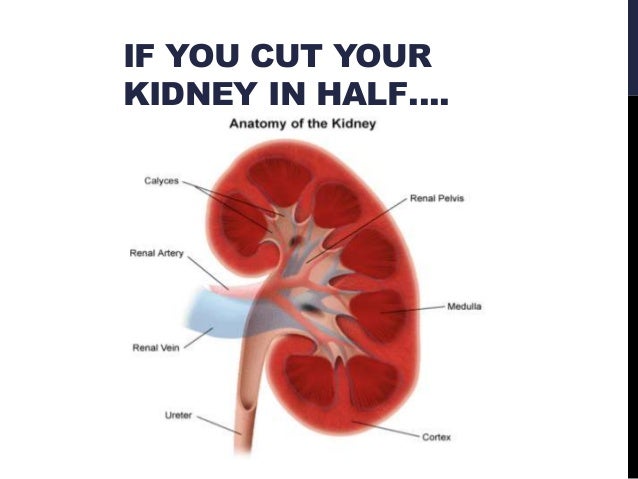
See the source image

We hear, but we do not listen. We talk, but we do not choose our words carefully.

The prophet explains our condition: “You are near in their mouth but far from their kidneys” (Jeremiah 12:2 ISR). Our Bible translators have replaced the word kidney with rein or heart and often as inward parts, but kidneys were the original wording. It was the sweet fat of the sacrifices. Our kidneys purify us. They separate the good from the bad.

“The position of the kidneys in the body makes them particularly inaccessible, and in cutting up an animal, they are the last organs to be reached. Consequently, they were a natural symbol for the most hidden part of a man (Psalm 139:13), and in Job 16:13 to “cleave the reins asunder” is to affect the total destruction of the individual (compare Job 19:27 Lamentations 3:13). This hidden location, coupled with the sacred sacrificial use, caused the kidneys to be thought of as the seat of the innermost moral (and emotional) impulses.” For more info on this topic click here.

“The Sages teach that:

  1. The kidneys advise us on what to do.
  2. ALL cognitive functions relating to making decisions occur in the heart and kidneys.
  3. NOTHING relating to this occurs in the brain. (see too Midrash Tehillim 14)
  4. One kidney advises to do good, one to do evil (this is presumably intended literally, since it is stated immediately next to the statement about the function of the organs).
  5. When God wants to judge whether we are good or not, He examines the heart and kidneys, not the brain.”

During the Jewish morning praises, there is a prayer called Nishmat or the breath of every living thing…It says this:

“For every mouth is in acknowledgement to You, and every tongue swears to You, and every knee bows to You, and every erect spine prostrates itself to You, and all hearts fear You, and all innards and kidneys praise Your Name, as it is written, “All my bones say, Who is like You, O God.”

Our kidneys AND BONES praise Him!

Science has discovered that hearing loss and moderate kidney disease are connected. Our kidneys filter our blood and remove toxins which go into our bladder and are excreted from our bodies. When they don’t work right, they can damage nerves and yes, hearing. Our Creator is perfect and each organ functions to cause a complete and perfect body. May His Body begin to function in the Spirit of truth, unity, and complete harmony as 1st Corinthians 12.

Our ears are like our hearts. Our hearts need the flesh cut off, and so do our ears.

To whom shall I speak and give warning That they may hear? Behold, their ears are closed–And they cannot listen. Behold, the word of the LORD has become a reproach to them; They have no delight in it” (Jeremiah 6:10).

I once had a friend who would try and show me scriptures that I could not see. She spoke words that I could not hear. I heard her mouth moving and enunciating the scriptures, but someone had already stood in front of me year after year proclaiming a different picture. Her words were not worth hearing.

I knew more. Her exhausted facial features expressed how ‘put out’ she was with me not hearing and receiving. No matter how hard she tried to open the verses up to me, I had dirty ears. I had potatoes in my ears. My kidneys and heart were not open to hearing her. I had kidney issues. I had heart issues. I had a pride issue.

This woman had no doctorate degree. She was sick. She wasn’t wealthy. Matter a fact she was quite the opposite. She wasn’t going to ‘church’ every week. I had been taught by men behind pulpits that sickness, poverty, and issues that were not positive were due to a person’s sins. They were out of church. They were perhaps not tithers. They were ignorant. Her explanation and interpretations concerning certain passages were interesting, but why would I listen to someone like her? She was in bondage. I was free (Sarcasm). James tells us to be quick to listen, but are we? Are we quicker to listen to those we esteem?

Last week, I walked out of our meeting, and the car parked next to ours had a license plate that said, “Listen.” The Israelite’s would not listen to Moses. Pharaoh would not listen. He had an uncircumcised heart.

“But Moses spoke before the LORD, saying, “Behold, the sons of Israel have not listened to me; how then will Pharaoh listen to me, for I am unskilled in speech?” Exodus 6:12. Verse nine explains why their ears were shut. “Moses told this to the Israelites, but they did not listen to him because of their broken spirit and hard labor.” HCS.

Sometimes we have been through so much hell even a morsel of hope is not accepted.

When Yeshua spoke, many picked up stones. When Stephen spoke the people put their fingers in their already dirty ears, and they too picked up stones. Stephen told the complete Biblical account and ended with this…

“You men who are stiff-necked and uncircumcised in heart and ears are always resisting the Holy Spirit; you are doing just as your fathers did. “Which one of the prophets did your fathers not persecute? They killed those who had previously announced the coming of the Righteous One, whose betrayers and murderers you have now become; you who received the law as ordained by angels, and yet did not keep it” (Acts 7:51-53 NASB).

“He who turns away his ear from listening to the law (instructions), Even his prayer is an abomination” (Proverbs 28:9).

The prophet Isaiah when asked who will go to these people with hard hearts, says,  “Here am I. Send me!”

He said, “Go, and tell this people: ‘Keep on listening, but do not perceive; Keep on looking, but do not understand.’ “Render the hearts of this people insensitive, Their ears dull, And their eyes dim, Otherwise they might see with their eyes, Hear with their ears, Understand with their hearts, And return and be healed” (Isaiah 6:9-10 NASB).

I’m going to close this blog with ears that itch. They itch to hear things. What type of things? Blessings, prosperity, honor of men, fame, mansions and everything good. No correction, no suffering, no poverty, no humbleness, nothing that would cause an ounce of repentance… only itching ear words that no matter how hard you scratch, it cannot be soothed because the flesh is never satisfied.

“Preach the word; be ready in season and out of season; reprove, rebuke, exhort, with great patience and instruction. For the time will come when they will not endure sound doctrine; but wanting to have their ears tickled, they will accumulate for themselves teachers in accordance to their own desires, and will turn away their ears from the truth and will turn aside to myths. But you, be sober in all things, endure hardship, do the work of an evangelist, fulfill your ministry” (II Timothy 4:2-5).

New Book Releases are Available HERE

Buy directly from me and get bundle deals HERE
A Biblical List of Fasting

At the end of this blog, you will find a list of around 20 different fasts mentioned in the Bible, including their purpose and outcomes.

We learn what not to do while fasting from Yeshua:
“When you fast, do not look somber as the hypocrites do… But when you fast, put oil on your head and wash your face, so that it will not be obvious to others that you are fasting, but only to your Father, who is unseen; and your Father, who sees what is done in secret, will reward you.” (Matthew 6:16-18)

Fasting is a topic that many people often overlook. A chocolate cake recipe is much more appealing! It can seem strange to go without food, especially both food and water. Are there clues in scripture that can guide us on when and how to fast?

“Do you not know that you yourselves are God’s temple and that God’s Spirit dwells in you? If anyone destroys God’s temple, God will destroy him; for God’s temple is holy, and you are that temple.” (1 Corinthians 3:16-17)

“The God who made the world and everything in it, being Lord of Heaven and earth, does not live in shrines made by man, nor is He served by human hands, as though He needed anything since He Himself gives to all men life, breath, and everything…” (Acts 17:24-25)

We have a temple that must be strong and united, but it is not made of stone; we are the living stones. “You also, as living stones, are being built up as a spiritual house for a holy priesthood, to offer up spiritual sacrifices acceptable to God through Jesus Christ (Yeshua Messiah).” (1 Peter 2:5)

When the elders approached Ezekiel during the fast in the fifth month, the Father responded with a question.

In the seventh year, on the tenth day of the fifth month, some elders of Israel came to inquire of the LORD and sat before me. The LORD spoke to me: “Son of man, tell the elders of Israel that I will not be consulted by you,” says the Lord GOD. He warned them of a looming destruction by a sharp sword that will affect both the righteous and the wicked. This encounter occurred during Jeconiah’s captivity, two years and five months before Nebuchadnezzar besieged Jerusalem.

In Ezra 3, the temple’s foundation is laid, and the people celebrate with joy, but some, especially the older priests and Levites who witnessed the first temple, weep at the sight. This creates a mixed atmosphere of joy and mourning, as described in Ezra 3:11-13. In Zechariah 7, the people of Bethel question whether to continue their annual fasts, reflecting on past mourning over significant events, including the destruction of the temple. Haggai offers clarity by encouraging them not to despise the rebuilding efforts. God assures them that the latter glory of the house will surpass the former and promises peace in that place (Haggai 2:9).

We are His house, and while we may lack unity and maturity, consider the Father’s response in Zechariah 7 when asked about fasting. He challenges the people: “Was it really for Me that you fasted? Were you not eating and drinking for yourselves?” The LORD then calls for true justice, compassion, and a rejection of evil among one another (Zechariah 7:4-8). The people ignored His words and failed to keep His Torah. Yet in chapter 8, God reassures that the fasts will transform into times of joy and cheerful feasts for Judah, emphasizing the importance of loving truth and peace (Zechariah 8:18-19).

The Father assures us that fasts can become joyful occasions. We can fast whenever we feel prompted, based on our health or desire, in private or as a community, while striving to keep Isaiah 58. Isaiah teaches us that fasting isn’t enough; we must reflect on our intentions.

“On the day of your fast, you do as you please and oppress your workers. You fast with conflict and strike out angrily, yet you cannot expect your voice to be heard. Is this the fast I have chosen: a day for a man to deny himself, bow his head, and wear sackcloth?

Shouldn’t the fast I desire be about breaking chains of wickedness, freeing the oppressed, sharing bread with the hungry, and caring for those in need? Then your light will shine like the dawn, and healing will come quickly.” (Isaiah 58:3-8).

A-List of Fast and reasoning behind it: 


Destruction

“The remnant there in the province who survived the captivity are in great distress and reproach, and the wall of Jerusalem is broken down, and its gates are burned with fire. When I heard these words, I sat down and wept and mourned for days; and I was fasting and praying before the God of heaven.” (Nehemiah 1:3-4).

The Father hears and brings the funds to start work on rebuilding due to his fasting and cries. When Nehemiah began to rebuild the walls, he was met with mockery and disdain, but he and the people continued to build with a weapon in one hand. 

Death: After the news of Saul and Jonathan being slain in battle, David calls for a fast. “Then David took hold of his own clothes and tore them, and all the men who were with him did the same. They mourned and wept and fasted until evening for Saul and his son Jonathan, and for the people of the LORD and the house of Israel, because they had fallen by the sword.” (I Sam. 1:11-12).

Ministry: “Now in the church at Antioch there were prophets and teachers: Barnabas, Simeon called Niger, Lucius of Cyrene, Manaen (who had been brought up with Herod, the tetrarch), and Saul. While they were worshiping the Lord and fasting, the Holy Spirit said, “Set apart for Me Barnabas and Saul for the work to which I have called them.”

And after they had fasted and prayed, they laid their hands on them and sent them off.” (Acts 13:1-3). They teamed up the apostle with the prophet, for Barnabus was a prophet. If you are unsure of who the five-fold of leadership is among you, fast and pray and get direction for leadership, just as Yeshua prayed before he selected the 12.

Appointing leadership: “Paul and Barnabas appointed elders for them in each church, praying and fasting as they entrusted them to the Lord, in whom they had believed.” (Acts 14:23).

Fasting during Pesach/ Passover-– Daniel prayed three times a day and fasted during Pesach: “In those days I, Daniel, was mourning for three full weeks. I ate no rich food, no meat or wine entered my mouth, and I did not anoint myself with oil until the three weeks were completed.” (Dan. 10:3-4).  These three weeks refer to the observance of Passover and the Feast of Unleavened Bread.

“I, Daniel, understood from the Scriptures, according to the word of the LORD given to Jeremiah the prophet, that the desolation of Jerusalem would last seventy years. So I turned to the Lord God and pleaded with him in prayer and petition, in fasting, and in sackcloth and ashes.” (Daniel 9:2-3)

(Haman was hanged on the second day of the Passover feast (Esth. R. and Meg. l.c.). The king’s insomnia occurs on Pesach night, with Haman hung on its second day.

To spare from death: Esther calls for a fast. “Then Esther told them to reply to Mordecai, 16 “Go, assemble all the Jews who are found in Susa, and fast for me; do not eat or drink for three days, night or day. I and my maidens also will fast in the same way. And thus I will go into the king, which is not according to the law; and if I perish, I perish.” 17So Mordecai went away and did just as Esther had commanded him.” (Esther 4:16-17).

Returning with all our hearts: “Yet even now,” declares the LORD, “return to Me with all your heart, with fasting, weeping, and mourning.” (Joel 2:12).

Waiting for the Messiah—To see His Face! “And there was a prophetess, Anna, the daughter of Phanuel, of the tribe of Asher. She was advanced in years and had lived with her husband seven years after her marriage, and then as a widow to the age of eighty-four. She never left the temple, serving night and day with fastings and prayers.” (Luke 2:36-37).

Fasting for zeal–David is mocked for fasting: “For I have endured scorn for Your sake, and shame has covered my face. I have become a stranger to my brothers, and a foreigner to my mother’s sons, because zeal for Your house has consumed me, and the insults of those who insult You have fallen on me. I wept and fasted, but it brought me reproach. I made sackcloth my clothing, and I was sport to them. Those who sit at the gate mock me, and I am the song of drunkards. But my prayer to You, O LORD, is for a time of favor.” (Psalm 69:7-13).

Fasting for sick friends: They repay me evil for good, To the bereavement of my soul. But as for me, when they were sick, my clothing was sackcloth; I humbled my soul with fasting,  And my prayer kept returning to my bosom.” (Psalm 35:12-13).

For the nation: “So I turned my attention to the Lord God to seek Him by prayer and petition, with fasting, sackcloth, and ashes. And I prayed to the LORD my God and confessed, “O, Lord, the great and awesome God, who keeps His covenant of loving devotion to those who love Him and keep His commandments, we have sinned and done wrong. We have acted wickedly and rebelled. We have turned away from Your commandments and ordinances. We have not listened to Your servants, the prophets, who spoke in Your name to our kings, leaders, and fathers, and to all the people of the land.

To You, O Lord, belongs righteousness, but this day we are covered with shame—the men of Judah, the people of Jerusalem, and all Israel near and far, in all the countries to which You have driven us because of our unfaithfulness to You. O LORD, we are covered with shame—our kings, our leaders, and our fathers—because we have sinned against You.” (Daniel 9:4-8).

Fasting during famine and locust: “If I close the sky, so there is no rain, or if I command the locust to devour the land, or if I send a plague among My people, and if My people who are called by My name humble themselves and pray and seek My face and turn from their wicked ways, then I will hear from heaven, forgive their sin, and heal their land.” (II Chronicles 7:13-14).

Fasting for our children that they would not be spiritually dead: “Then the LORD struck the child that Uriah’s widow bore to David, so that he was very sick. David, therefore, inquired of God for the child; and David fasted and went and lay all night on the ground. The elders of his household stood beside him in order to raise him up from the ground, but he was unwilling and would not eat food with them. (II Sam. 12:15-17).

Evil Kings fasted and were met with compassion: “Surely there was no one like Ahab who sold himself to do evil in the sight of the LORD, because Jezebel his wife incited him. He acted very abominably in following idols, according to all that the Amorites had done, whom the LORD cast out before the sons of Israel.

“It came about when Ahab heard these words, that he tore his clothes and put on sackcloth and fasted, and he lay in sackcloth and went about despondently. Then, the word of the LORD came to Elijah the Tishbite, saying,  “Do you see how Ahab has humbled himself before Me? Because he has humbled himself before Me, I will not bring the evil in his days, but I will bring the evil upon his house in his son’s days.” (I kings 21:25-29).

During temptation: “Then Jesus, full of the Holy Spirit, returned from the Jordan and was led by the Spirit into the wilderness, where for forty days He was tempted by the devil. He ate nothing during those days, and when they had ended, He was hungry.” (Luke 2:1-2).

Fasting for protection: “And thereby the Ahava Canal, I proclaimed a fast, so that we might humble ourselves before our God and ask Him for a safe journey for us and our children, with all our possessions. For I was ashamed to ask the king for an escort of soldiers and horsemen to protect us from our enemies on the road, since we had told him, “The hand of our God is gracious to all who seek Him, but His great anger is against all who forsake Him. So we fasted and petitioned our God about this, and He granted our request.” (Ezra 8:21-22).

The Day of Atonement:  This is the holiest day in Judaism and the day that only the High Priest could go behind the veil and make atonement for the people. Our High Priest, Yeshua, offered true atonement by His blood, and the veil was torn in half. 

“Again, the LORD said to Moses, The tenth day of this seventh month is the Day of Atonement. You shall hold a sacred assembly and humble yourselves, and present an offering made by fire to the LORD. On this day, you are not to do any work, for it is the Day of Atonement when atonement is made for you before the LORD your God. If anyone does not humble himself on this day, he must be cut off from his people. I will destroy from among his people anyone who does any work on this day.

You are not to do any work at all. This is a permanent statute for the generations to come, wherever you live. It will be a Sabbath of complete rest for you, and you shall humble your souls. From the evening of the ninth day of the month until the following evening, you are to keep your Sabbath.” (Leviticus 23:27-32).

After Passover, is the Feast of Unleavened bread when Jews/Messianic assemblies eat matzah, a cracker with no yeast. Paul said, “Your boasting is not good. Do you not know that a little leaven leavens the whole lump of dough? Clean out the old leaven so that you may be a new lump, just as you are in fact unleavened. For Christ, our Passover also has been sacrificed. Therefore let us celebrate the feast, not with old leaven, nor with the leaven of malice and wickedness, but with the unleavened bread of sincerity and truth.” (I Corinthians 5:6-8, NASB).


Podcast With Stephanie Pavlantos, Satan Unmasked, Book One

 Stephanie Pavlantos invited me on her podcast, Grafted: Jewish Roots of Christianity, where we discussed my new book release, Satan Unmasked, Book One of the Unmasking the Unseen Series.

Scroll to Top