
The battle to live at times is hard. The battle to want to live, even in a healthy body can be harder.
There’s a small slit on my bottom lip where it chapped, cracked, and finally ripped in the hospital. I bite at the gaping place between my teeth, softening it with my tongue so it never fully heals. My mouth is full of thrush sores—tiny blisters, loose skin hanging from my inner cheeks. Every swallow reminds me that my immune system is too compromised to keep up.
I’ve been on thrush medication for weeks now. The steroids—my “roids,” my “incredible hulk juice”—are both my saving grace and my tormentors. They rescue my life and wreck my body. The latest gift they’ve handed me is steroid-induced Addison’s disease… adrenal crisis.
My left arm is bruised from IV ports, it’s nearly as battered as my chest and abdomen where the woman performing my heart ultrasound pressed harder and harder, as if force would reveal something my body didn’t want to give up.
I’m panting with HMPV (human meta-pneumovirus). Oxygen and breathing treatments have become a daily dance. The coughing has inflamed the hernia behind my colostomy; I clutch my side with my right hand and brace my ribs with my left. Each violent cough releases urine into an adult diaper—the kind made in China modeled by a slim woman with sculpted thighs on the packaging.
“All men are liars,” I mutter, quoting Psalm 116. Humor keeps me going. In the Valley of the Shadow of Death, The Holy One Leans Close.

The antibiotics are so strong they’ve triggered bleeding from my gut. Colostomy bags hold waste, but I quickly learn that they don’t hold blood very well.
I feel warmth running down my leg, oozing beneath my equipment. It is day five—or six; time has blurred—and as I catch my reflection in the sink mirror, I freeze. The door is still ajar from the nurse’s last visit. Panic sets in.
“Chief!” I call out in my best Scarlett O’Hara voice. I want my husband. I want safety. But he’s home sick with the same virus and can’t be here until later.
Shift change has just happened. Staff rush down the hallway, pushing charting machines, barely glancing in. A new nurse and an aide, both strangers to me, appear in the doorway. If it had been one of the nurses I’d grown attached to this week, it would have felt less traumatic, But I have never seen these new staff members before. I stand at the mirror as Blood seeps and splatters the floor, then, for good measure, liquid poo plops on my open sandal.
My equipment is starting to fall off, and soon my raw, inflamed side will be visible. If you’ve never seen a stoma, brace yourself—they aren’t pretty. I want to hide.
Due to the waste and blood, and me wheezing frantically, my PTSD kicks in. With the added heavy dose of Solumedrol steroids pumping through my veins, I wobble with cane to the bathroom commode with a handful of baby wipes pressed over my side. The nurse walks in.
I’m bleeding,” I say from the commode.
The wipes in my left hand bloom red. I wipe my leg and shoe as best I can with surgical gloves on.
“Okay,” she replies gently.
“Where are you bleeding from? How can I help?”
“I need my ostomy scissors!” I speak. “I need to cut a new flange and ring. I have a colostomy.”
It’s now become a horror picture show I can’t escape from. How am I here again? I want to evaporate in the air.
In the Mirror Nothing Hides–Not the Body, Not the Fear, Not the Truth.
I want to evaporate in the air. “I need a shower chair,” I belt. I need. I’m needy. I’m sorry,” I whisper through tears.
“Don’t be sorry,” she answers softly. “Let’s get you taken care of.” She calls the ostomy nurse while I explain between sobs that I have Gastroparesis and the antibiotics have torn up my side, and I forgot my extra adhesive strips. I show her photos of the supplies I need. She screenshots everything like it’s a mission and tells me it’s going to be okay.
She has a compassionate smile and is calm, and reassuring. Somehow, we reapply the equipment. I hold my side and pray the bleeding stops. “I need my ulcer meds,” I say. “My gut is swelling.” I show her the picture of the medication bottle I keep on my phone for emergencies. Then finally—warm water. Showers of blessings. Fresh bedding. Clean shoes.
Nurses gathering like earthly angels.
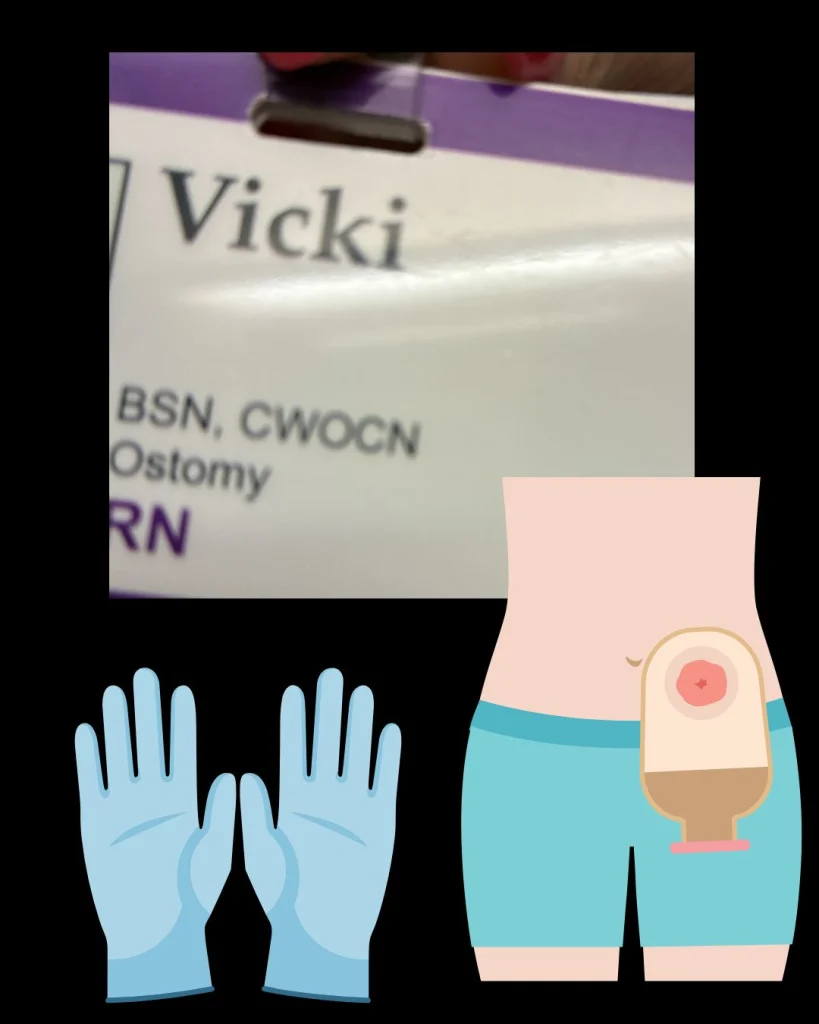
In twenty years of hospitals, they are the some of the most kind-hearted I’ve encountered. Afterwards, A lady with blonde hair and a kind smiles who has my mothers name says, “Hello, I’m Vicky, the Ostomy nurse. I’m here to help you.”
How fitting. Abba has thought of everything.
When all is settled, I breathe the ancient words:
“Death, where is your sting?”
But, Sting is a catchy rock-star name—not a reference to death. “O death, where is thy sting?” is neither in the Septuagint nor the Hebrew of Hosea. It reads,
“From the power of the grave I ransom them, from death I redeem them. Where is your plague, O Death? Where is your destruction, O Grave?”
It is Adonai who has ransomed me again from the plague and death.
Many people are suffering far worse than I do. I don’t tell these stories for pity. I tell them because countless hide their suffering behind silent doors. I pray my words help them heal or begin to use what they have left and find joy in the small things. With great crushing comes great oil.
I began trauma counseling three weeks before this hospital stay, specifically to address the medical trauma woven through the last twenty years of my life—especially the ICU in January, and I am not ashamed, nor have I ever felt weak to seek counsel.
Sickness is an epidemic of destruction. It beats the breasts, covers the mirrors. No one sits shiva with the suffering; they sit with the family after the spirit of their loved one takes flight. Now, in my late fifties, I finally understand why my mother, with Parkinson’s, often said, “No one calls. No one understands my suffering.”
People avoid suffering or discussing it because it exposes them. It makes them vulnerable. It forces them to see their own shadows.
One of my sons recently said, “Everyone’s going to die sometime.” True. But who will sit with the suffering before death arrives? That is the highest calling. Someone had to carry our Master’s cross that he could not bear. Who is blessed to carry the cross for someone unable to bear it in their final moments?
Suffering comes in many hues. It’s not just physical sickness. It can be a sickness of the soul. It can be a tumor. A cancerous spiritual malady. It can be pride that reeks like gangrene and we unaware that we are rotting, with decay within our very souls.
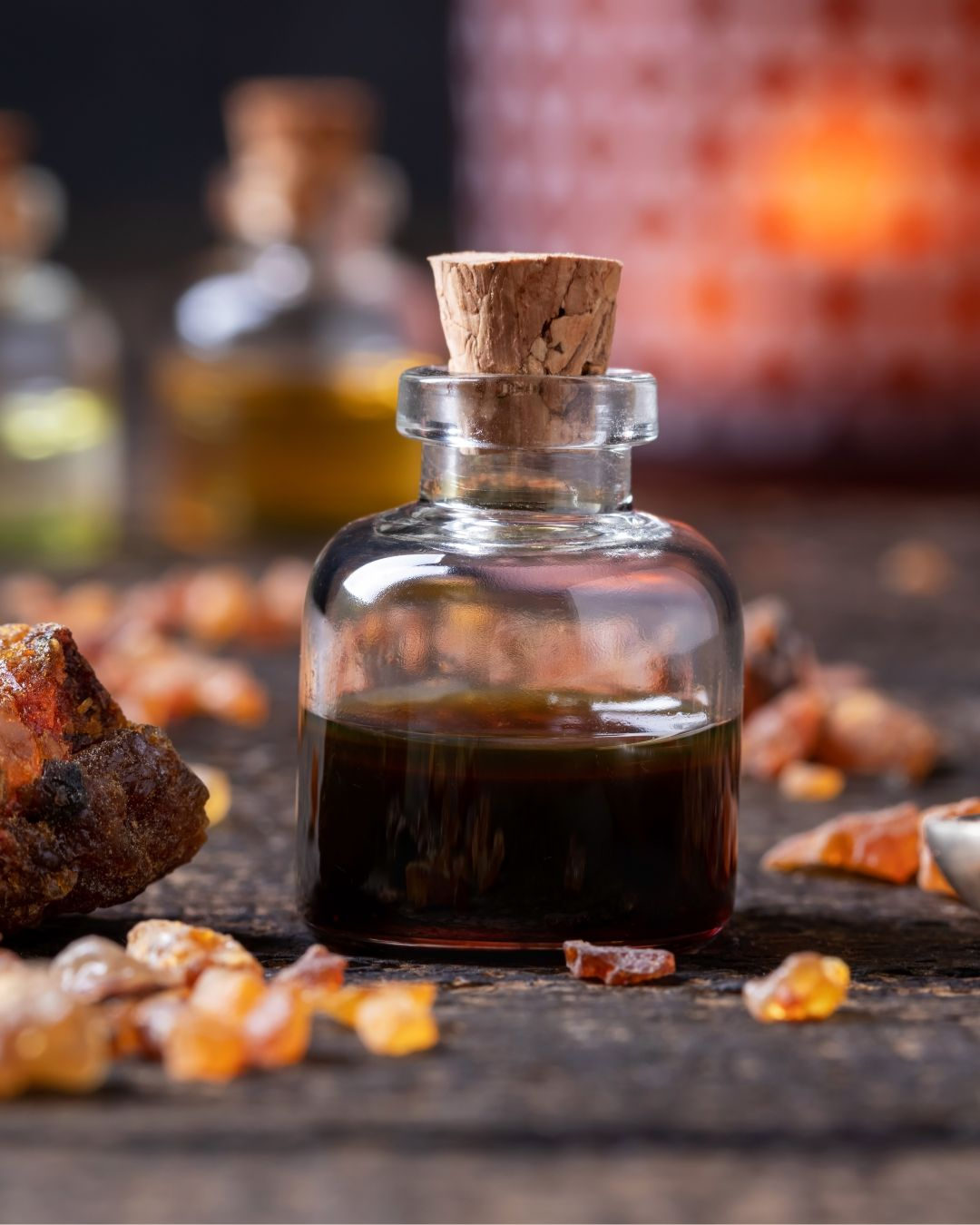
Suffering can be a wound so deep, we’ve run out of gauze and tape to patch it, so we bleed all over the floor as we walk. It can be a mommy issue, a daddy issue, a spouse, or a child who grieves us. Sickness obscures reflections. Yet, rarely does one mourn for those who suffer to the point that they offer myrrh. Pure unadulterated myrrh.
Jennifer, if you are reading this, thank you for being such a loving nurse and bringing alloys of medicine.
Despite the suffering I’ve endured, my journey has been incredibly rewarding and fruitful. Many may not have accomplished what I have since becoming fully disabled at 40. My struggles have transformed me into an author and a researcher. After a decade of persistence, I can now confidently declare myself a successful author, independent of my followers or book sales. I have come to realize that I am blessed with words, words bring me joy, and the world of research is a source of fascination for me. Although, my numb, rubber elephant feeling legs may not run out to shop or jog on the beach, my fingers on my keyboard SING.
Gratitude is a powerful force. If you lose something, make the most of what remains. I cannot help but ponder how my journey of suffering has shaped my voice as a writer. At home, as the steroids diminish, my legs tremble, hormones fluctuate, and my hair feels like burnt hay, the sensations are overwhelming. My mind bends and twists, yet I find balance in the smallest treasures. You can too; it simply requires slowing down and breathing. Listening to His still small Voice. Allowing those with myrrh to come and anoint your broken body, to help carry your cross, and to wait with expectation for resurrection morning!
- “From the power of the grave I ransom them, from death I redeem them. Where is your plague, O Death? Where is your destruction, O Grave?”
Part II Coming soon. Blessings,
Tekoa Manning

A short recap:
After returning home from the hospital, the steroids began to taper off. Then comes the storm after the storm—my legs wobble, my hormones rage like tidal waves, my hair falls out in dry, straw-like handfuls, and my thoughts twist and bend in ways I don’t recognize.
And yet… even in this turmoil, I find treasure. As Rebecca Solnit said,
“The future is dark, with a darkness as much of the womb as the grave.”
― Rebecca Solnit
Morning coffee makes me smile. I shuffle with a walker to the back patio doors. My palm trees greets me. A Monarch butterfly floats past, and White seagulls gawk, passing overhead.
My backyard is my sanctuary, and sometimes stories unfold from there like this one.
I glance next door. Earlier this year, I photographed the beautiful flowering trees and plants blooming on the other side of the concrete wall that surrounds my backyard. We learned recently that a realtor or investor is flipping the abandoned house. They discovered that the pool was full of frogs and tadpoles. This can serve as metaphors for the plagues of Egypt, but frogs are incredibly brilliant as everything our Creator made is. Some of us are in a season like the wood frogs:
Wood frogs get through the coldest parts of the winter by freezing solid.
“Their heartbeat and breathing stop entirely….but they’re not dead. They’re just waiting out the cold, their cell walls protected by natural antifreeze that they manufacture for the express purpose of making it through the winter. When spring comes, they simply thaw out and hop back to life.”
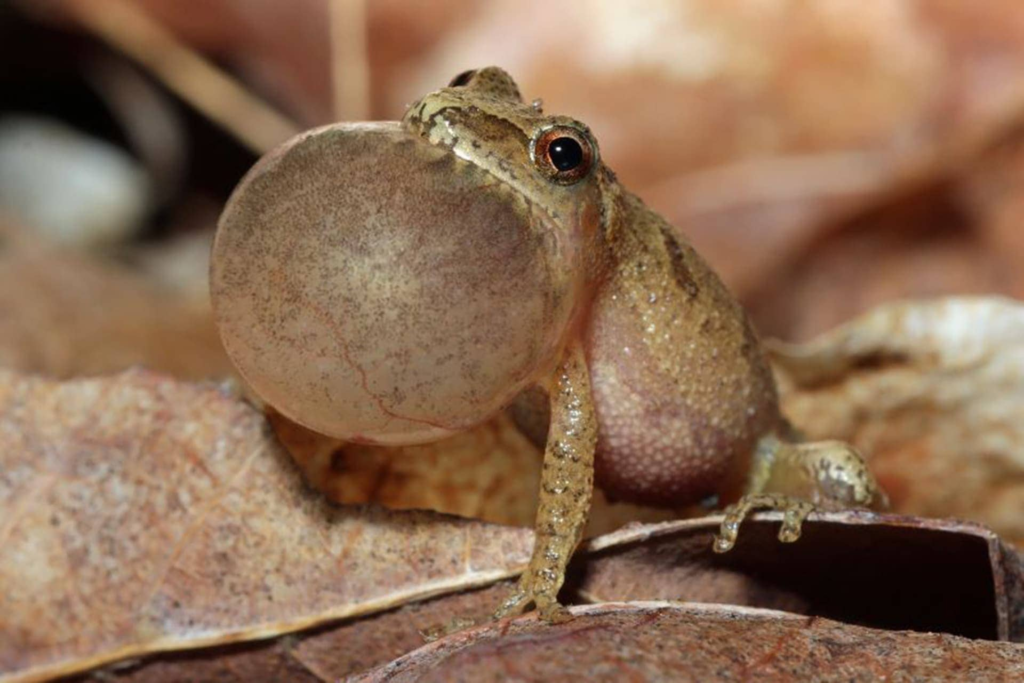
I kept asking my husband what the loud noises were in the back yard this spring, seems it might have been a spring peeper or some other type of frog. Add a whole pool of them and you have a chorus.
“Adult peepers are only about an inch long, but they have vocal sacs in their chins that expand with every “peep,” amplifying the intensity of each call. Groups of spring peepers, peeping together in chorus, have been measured at 120 decibels, as loud as a rock concert and louder than a jackhammer!”
The new owners find giant palmetto roaches in the shed and haul them away—more lessons. Besides being a food source for other animals, Palmetto roaches are beneficial for the ecosystem as they act as decomposers, breaking down decaying organic matter and returning nutrients to the soil.
Often we only see the dark side of things. We only see creatures and people with stink eyes. We forget how important life is all around us.
The new owners discover that the massive tree, which blocks the sun from blinding me during my morning coffee, was growing into the house and must come down, more knowledge.

They mow the yard and cut down the tree piece by piece. It takes days to destroy the tree. I surmise from my 1950s bungalow that the tree is well over 70 years old. I’m sad for the tree. The tree could have possibly survived if it had been trimmed and pruned.
“I am the true vine, and My Father is the keeper of the vineyard. He cuts off every branch in Me that bears no fruit, and every branch that does bear fruit, He prunes to make it even more fruitful.”
John 15:1-2.
Days later, the plumbers arrive, their faces grim yet determined. They inform my husband that there are rats in the sewer—clever, resourceful creatures that have developed cunning methods to evade danger. This revelation adds another layer to our understanding of the unseen world beneath our neighbor’s home. Sometimes loving our neighbor as ourselves involves getting to know them and what they are going through regardless of their nationality, skin color, or religious background.
When we moved in, we had taken every precaution to rat-proof our home. As for insects, I’ve only encountered one, an unfortunate wanderer that surfaced during the dismantling of the neighbor’s old shed. It flew under the back of my blouse and I realized I still could dance under certain circumstances, but it looked more like this.

In the background, a constant fire crackles in the yard, its flames consuming sticks, insects, and perhaps even the frogs. The air carries a mix of smoke and the earthy scent of charred wood, a reminder of the relentless cycle of life and decay that plays out just beyond our walls and during this season leading into winter.
I study my lovely pool area, with its clean water, and my Aloe Vera plants growing in pots on tables subsequent to my new patio furniture, and reflect on what was hidden behind my concrete wall.
Frogs, pestilence, roaches, a tree giving life became too large, too unkempt to the point it was destroying the home because those in charge did nothing.
How many of you have rats in your life? Rats live in sewage and abandoned dwellings. Rats carry disease. Rat metaphors often carry negative connotations of deceit, betrayal, and a lack of integrity like “dirty rat, I smell a rat,” and so on. However, rats are highly intelligent, capable of learning complex tasks, solving puzzles, and navigating mazes with impressive memory retention. Certain rats, like the African giant pouched rat, are trained to detect explosives, landmines, and diseases.
Of course most of us know that we need trees. In Jumping for Joy in the Midst of sorrow devotional, I discuss how trees talk to their young and protect them from predators. Here is a portion from Derek Markham:
Derek Markham’s recent blog titled Trees Talk to Each Other and Recognize Their Offspring is quite eye-opening.
Now, we know we all favor our own children, and I wondered, could Douglas fir recognize its own kin, like mama grizzly and her cub? So we set about an experiment, and we grew mother trees with kin and stranger’s seedlings. And it turns out they do recognize their kin. Mother trees colonize their kin with bigger mycorrhizal networks. They send them more carbon below ground. They even reduce their root competition to make elbow room for their kids. When mother trees are injured or dying, they also send messages of wisdom on to the next generation of seedlings. So we’ve used isotope tracing to trace carbon moving from an injured mother tree down her trunk into the mycorrhizal network and into her neighboring seedlings, not only carbon but also defense signals. And these two compounds have increased the resistance of those seedlings to future stresses. So trees talk.”
Metaphorically, like the tree that had to be removed, some have encountered a large person who is destroying their home. Maybe they are not large, but they seem to tower, threaten, control and keep the person walking on eggshells or living in poverty, or fear.
Sometimes, we have to uproot ourselves and replant. Sometimes we pray that the person will humbly allow the Father to prune.
Still, I’m in shock over the condition of the house because from the outside, it does not look that bad. Sure it needed some things. I vaguely remember one of our neighbors, a young woman on a riding lawn mower. I remember their plants and the gorgeous flowers in their flower beds. An older couple and a young man lived there with the woman. Suddenly, they left.
What did the owners take with them on their flight? From the appearance of things, the bare necessities. All their furniture was placed in the street. Their large kidney-shaped pool was a mess of green screaming frogs.
They made daily choices to allow things into their life. First, it was one thing. Some bugs. No money to fill the pool. No money for an exterminator possibly. Plumbing issues. Rats. On and on, until their home was infested. Perhaps, they were too ashamed to ask for help. Possibly, too depressed to remove the frogs or fight the bugs. Things became so bad, so unlivable, that all they could do was flee in the night. Darkness that can be felt. Possibly the older couple raised their children in the house. Planted the tree many moons ago?
Eventually, new neighbors will move in. Everything will be torn out and redone. Pristine. They will have no idea what was in the house or outside unless they are told, and they will never know the stories of the people who dwelt there.
The unlivable condition will become another persons salvation. With death comes resurrection and new birth. We are born anew. All things are new. We walk away from death and stagnant waste and enter sparkling newness.
It happens in our spirit. Our mind. Our very soul. Our words speak life concerning others. We learn to not speak words like: “Those filthy trashy no good neighbors.” Instead, we wish them well. We pray that they have the finances to meet their needs and the wisdom to make good decisions. We ask that the elderly are cared for.
We enter our new home, and the sun is unobstructed. We swim in clean waters and eat from a bountiful table. We sing. We dance. We notice creation.
It’s a new day.
With each death I encounter, I begin anew. Like a baby, I cling to a walker. I wobble. I need help with food, drink, and bathing for a season.
I require extra sleep and time alone.
I’m not always ready to discuss the horror show—the blood, the gasping for air, the messiness, the scars, and battle wounds. Sometimes, I want to feel normal. I want to hear other people’s stories. I want to reflect on how my grandmother, Nola, showed up to help me move my IV, and is the name of my new doctor. How all my nurses carried the names of my family members and were there to cheer me on, reminding me that I am flesh and bones, dust—a vapor. And so are you.
In the meantime, to borrow the words of Mary Oliver, “What will you do with this one crazy life you’ve been given under the sun?”
We cannot stay in death.
I walk through the valley like everyone else, but I don’t pitch a tent there, and neither should you.
Healing is awakening.
It is the quiet:
-
- the morning coffee
-
- The palm tree bowing like an old friend
-
- the butterfly drifting through winter
-
- The white seagulls crying above the sanctuary of my yard
-
- The reminder that my body may be broken, but my soul is not diseased
Sometimes, healing is sleeping for days with your ringer off.
Sometimes, healing is choosing silence instead of explanation.
Sometimes, healing is letting your spirit breathe without the noise of other people’s opinions pressing on your chest.
The tiniest treasures become lifelines.
When going through the valley of the shadow of death:
Who will sit with you when you suffer?
And who will you be brave enough to sit with in theirs?
Because suffering, when honored, becomes oil, and lamps show the way for others still trying to find their footing in the dark, but darkness also lives in the womb.
Blessings,
Tekoa Manning

Vulnerability, a means of healing…
We must learn vulnerability to heal and bring healing to the Body of the Messiah. Too many people, especially in leadership, are walking wounded. They remain silent because they feel the need to appear perfect in public. However, throughout Biblical history, every family faced challenges, including murder, suffering, disease, and heartbreak. For example, Aaron’s first sons, who held esteemed positions, ended up being consumed by fire while wearing their priestly garments. The lives of David, Eli, and Jacob’s families were also filled with turmoil.
Today, we witness divorce, messy custody battles, and children struggling with issues such as drug use and pornography. These struggles occur within the community of Believers, often hidden away due to a fear of judgment. Just ask King David, who faced the trauma of his daughter being raped by his son stayed silent at a time when his voice was needed.
Many people wear masks, hiding the chaos of their lives behind closed doors. They fear that expressing their struggles will only invite shame or be dismissed with the attitude of “It’s just the Devil.” The devil has been given too much credit; a simple look in the mirror could reveal the truth (Pick up a copy of Satan Unmasked). HERE
Embracing vulnerability leads to personal growth. It is time to remove the mask and fully embrace who we are and what we are experiencing, but can we find a safe place among our neighbors? Jennifer Caspari Ph.D states,
“Humans have a strong instinct for self-protection, to avoid pain and hurt. However, being vulnerable is part of being human. Being vulnerable requires us to let our guard down and be seen for who we authentically are. This is difficult, and a key part of enhancing self-acceptance and genuine confidence, building relationships, and strengthening quality of life is allowing ourselves to be seen by ourselves and others.” HERE.
Having lived with a disability since my late thirties, I have often been wounded and surprised by the views of Believers regarding sickness, mental illness, and disease. I also find myself in the position where leaders confide in me about their secret health and family issues. Why? Because they fear ostracism or judgment from others. These leaders are concerned that people will attribute their health problems to not following commandments, poor eating habits, or various other reasons, such as generational curses, demonic strongholds, unforgiveness, fear, or trauma. And the worst, being labeled a hypochondriac or someone lacking faith.
Of course, we know that the daughter who was vexed with demons was spared because her mother cried out for her with faith, and the lame man was lowered through the roof by four friends who carried him to the Healer.
I could recount stories of illness from the earliest accounts recorded in the Bible to more recent times. My research on this topic began twenty years ago when my mother was diagnosed with Parkinson’s disease. I could reference every depressed prophet who longed for death or list the many holy men who were beheaded, stoned, crucified, or who suffered greatly in various ways. I could detail how every demon and swine fled at the command of the greatest voice to ever declare, “Go!”—and they went! There was no binding and loosing, decreeing and declaring or misinterpreting scriptures to free a person.
Some of the most liberated individuals I’ve ever encountered were those who were seriously ill or nearing the end of their lives. I have witnessed friends who faced deep pain caused by Believers while dealing with conditions such as ALS, cancer, multiple sclerosis, tumors, spinal issues, autism, heart conditions, and gastrointestinal problems. At times, it is not us but our children who suffer. Many of us have endured these challenges in silence due to the harsh judgments from Job’s friends.
I have witnessed people going off their medications and ending up in the hospital, and even one person faced lockdown because others claimed their pharmaceutical treatments were witchcraft. While some medications may indeed be questionable, doctors have saved many lives. On the other hand, marijuana, a plant known for its healing properties for seizures, is often labeled as demonic, just like other natural herbs.
I’ve been diagnosed with multiple sclerosis (MS) twice, only to have the diagnosis removed. Once, after a spinal tap and a full MRI workup, someone told me that I needed deliverance from demons and unforgiveness—that’s why I had MS. About a year later, that same person contacted me, apologized, and humbly confessed, “I now have MS.”
I would never wish such suffering on anyone, but I can honestly say that suffering has been my greatest teacher, and I am not the healer. We often forget that we are not living in the Garden of Eden. The conditions here, such as our water and food sources, have changed significantly, but despite that, He has numbered our days.
I am writing this because I believe it’s time for humility and freedom to be part of our journey, and that begins with being vulnerable. Remember who attended the Great Supper? It wasn’t the wealthy and healthy; it was the lame, blind, crippled, and homeless—those from the hedges, highways, and byways. Could it be that they needed a Savior the most?
What of the broken, wounded souls?
“But Jesus replied, “A certain man prepared a great banquet and invited many guests. When it was time for the banquet, he sent his servant to tell those who had been invited, ‘Come, for everything is now ready.’
But one after another they all began to make excuses. The first one said, ‘I have bought a field, and I need to go see it. Please excuse me.’
Another said, ‘I have bought five yoke of oxen, and I am going to try them out. Please excuse me.’
Still another said, ‘I have married a wife, so I cannot come.’
The servant returned and reported all this to his master. Then the owner of the house became angry and said to his servant, ‘Go out quickly into the streets and alleys of the city, and bring in the poor, the crippled, the blind, and the lame.
‘Sir,’ the servant replied, ‘what you ordered has been done, and there is still room.’
So the master told his servant, ‘Go out to the highways and hedges and compel them to come in, so that my house will be full. For I tell you, not one of those men who were invited will taste my banquet.’”
Luke 14
In Luke the people make excuses due to new spouses, properties, and sports cars, in Matthew those mentioned, don’t give a rats A%#:
“But not caring, they went away, one to his own field and one to his trading.” (Aw, stock market) Matthew 22:5…
Not caring… having no thought or concern… seeking worldly pleasures. I have observed that those who have experienced the greatest suffering in life often tend to be the ones who give to the poor, widows, orphans, and those in need of healing. It’s important to remove the mask and be vulnerable; this is how you can discover who your true friends are, and how to allow others a voice to share their greatest tragedies safely. We must walk in the power to confront darkness, expose lies, and bring everything to light so that all can see and address it.
As Babylon falls—and it is indeed falling as I type this—everyone will come to realize that it was never as grand as it seemed, nor was it better than the marriage supper of the Lamb, who, by the way, longs to share a meal with us and not just once a year.
It’s time to draw near to Him, as He faithfully promises to draw near to us! I’m going to sit with the Lamb for a bit and talk to Him about my day. I hope you will too.
If You want to learn more about sickness, disease, mental health issues, demons, and healing, Spirits Unveiled can be a great resource. You can purchase it here on my shop or in many venues, Kindle, Paperback & Audio, HERE.
Blessings,
Tekoa Manning


Saul’s grandson, the son of Jonathan, named Mephibosheth, was crippled as a child. When he was five years old, a report came that Saul and Jonathan had been killed in battle, and when the boy’s nurse heard the news, she picked him up and fled. But as she hurried away, the nurse dropped Mephibosheth, and he became crippled (II Samuel 4).
Oh, the tragedy, of it all! We don’t hear much more about this boy again until II Samuel. David decides to bless anyone left of Saul’s house, the greatest enemy he ever had. David approaches Mephibosheth, now a young man, and Mephibosheth says, “What is your servant that you take an interest in a dead dog like me?” How ironic that the name “Mephibosheth” means destroyer of shame. Yet his crippled-up legs had brought him just that–shame.
Have you ever felt crippled or worthless, perhaps even like a “dead dog”? Maybe not to that extreme, but perhaps you can relate to another biblical figure, a woman named Ruth.
In the story of Ruth, the wealthy landowner Boaz notices her while she is gathering leftover crops and grains. Boaz then speaks to her.
(Ruth 2: 8-10) “Listen, my daughter. Stay right here with us when you gather grain; don’t go to any other fields. Stay right behind the young women working in my field. See which part of the field they are harvesting, and then follow them. And when you are thirsty, help yourself to the water they have drawn from the well.’ Ruth fell at his feet and thanked him warmly. ‘What have I done to deserve such kindness?’ she asked. ‘I am only a foreigner.'”
Ruth wonders why she is receiving kindness.
Have you ever felt like a stranger by people you know and have known all your life?
I can relate to these two people, Ruth and Mephibosheth. Maybe you aren’t crippled in your legs or feel like a foreigner, but you feel disabled in some other way? Perhaps it’s drug addiction that has crippled you, cancer, abuse, depression, or a nasty divorce. Whatever your illness is, I know one place you can go where all the hurt and pain disappears–The King’s Table.
Back in II Samuel, when Mephibosheth walked into a room, he was noticed, not for his beauty or even his heritage as the grandson of a king and the son of a mighty warrior. No, that is not what people noticed; they noticed his hobbling bent up legs.
When David searched for Jonathan’s son, and brought him to the palace, and placed him at his table, the King’s table covered his twisted legs that wouldn’t work right. The king’s table hid all his infirmities. He was under the shade of that table, and he was fed delicacies. One day, Mephibosheth went from thinking he was a dead dog to eating at the king’s table. What a remarkable thing David did. He was showing kindness to the seed of his enemy!
I hope that if you feel like a dead dog right now, you can see this disabled man hobbling, needing help up into a chair at the King’s Table.
At times, we may need help climbing up to that Table dripping with myrrh. We need a David to come and say, “Mephibosheth, you shall eat bread always at my table,” (II Samuel 9:10).
We must remember that our Father is a King and that we have worth. We are worthy of love, and our Father cherishes us.
Perhaps you relate more to Ruth. She felt crippled, too, but in a different sense. She was a foreigner, a poor woman picking up the leftover scraps of barley. My mother named me Ruth, my middle name and she used to compare Ruth;s barley to my waitress tips.
Things end well for Mephibosheth and Ruth. Though they had afflictions, they were eventually able to climb up to the Table and drink the sweet wine Abba Daddy had poured out for them. They were able to eat bread at His Table. They were hidden by His banner, under the shade of His Right Hand, and favor was given to them.
I pray that whoever is reading this that your latter years will be greater than your former and that you eat at the King’s Table. I pray that you know that Yahweh has a plan for your life, a plan not to harm you but to give you hope and a future. I pray that you realize you are not a dog but a child of the greatest King, Yeshua the risen King.
Do you know how important you are to our Father?
Climb up to the King’s Table and sit awhile, sup with Him and taste and see that the Lord is good!
“He will cover you with his feathers, and under his wings, you will find refuge. His truth is your shield and armor,” (Psalm 91:4).
Blessings,
Tekoa Manning