

Inspirational Teachings
This section is here to inspire you to embrace life fully—not by chasing wealth or fame, but by recognizing the gift of life and using your unique talents to bless others. Here, you will discover sorrow and joy, healing and birthdays, and the beauty that life offers.
Table of Contents
Table of Contents
The Rose of Rhoda
The rose of Roda is a sweet smelling perfume and one the Holy One’s daughters carry!
In Acts chapter 12, we learn that it was the time of Passover, also known as the Feast of Unleavened Bread, a week-long festival. Peter, one of Yeshua’s apostles, is imprisoned, chained between two soldiers. This is a temporary holding cell before he is brought before the people for execution.
The scripture states, “And about that time, Herod the king began to mistreat certain members of the assembly. He killed James, the brother of John, with the sword. When he saw that this pleased the Jews, he also seized Peter. This was during the days of the unleavened bread. After capturing him, he put him in prison and assigned four quaternions of soldiers to guard him, intending to bring him before the people after the Passover” (Acts 12:1-4).
It has been about two years since the death, resurrection, and ascension of Yeshua, and Peter has witnessed much in that short time. Now, James, the brother of John, has been executed. One might assume it would be difficult to sleep while handcuffed between two Roman soldiers, yet Peter sleeps so soundly that an angel has to poke him in the side to wake him. Is he simply exhausted, or has he accepted the possibility of bearing the same fate as Yeshua? Remember, our Yeshua was also pierced in the side.
Herod and the long line of Herodians resemble Pharaoh. They kill innocents, believing themselves to be gods, and seek to destroy God’s people. They take pleasure in signs and wonders, keep others imprisoned, and pursue magicians. Such figures are present in our gatherings today, showing no fear of the Lord. By examining their fruit, we can discern its true nature; however, we must also inspect our own thoughts to determine if they are healthy or corrupt.
“Hear, O earth; behold, I will bring evil upon this people, the fruit of their thoughts. For they have not listened to My words and My law; they have also rejected it” (Jeremiah 6:19).
Herod had thoughts about Yeshua:
Herod was excited to see Jesus because he had wanted to witness a miracle performed by Him (Luke 23:8). When Moses and Aaron spoke to Pharaoh, they were instructed to perform miracles, such as turning a staff into a serpent (Exodus 7:9).
Peter was imprisoned under heavy guard, appearing trapped like many of us can feel when bound by despair. However, fervent prayers were offered for him.
On the night Herod intended to bring Peter forward, an angel of the Lord appeared, striking Peter’s side to wake him. “Get up quickly,” the angel said, and Peter’s chains fell off (Acts 12:6-8, NASB). He was instructed to gird himself, put on his sandals, and follow the angel, echoing instructions from Exodus as the Israelites prepared to flee Egypt in haste (Exodus 12:11).
Peter followed the angel past the guards and out of the prison, not realizing it was real until he was free. He declared, “Now I know for sure that the Lord has sent His angel” to rescue him (Acts 12:9-11, NASB).
Just as an angel of death passed over Egypt, the angel of light, the Lamb of God, protected Israel. God promised to send an angel to guard His people along their journey (Exodus 23:20-21).
Returning to Peter, he knocked at the gate of Miriam’s house, where many were fervently praying for him, and a servant-girl named Rhoda came to answer.
When she recognized Peter’s voice, she was filled with joy and ran to announce that Peter was standing at the gate instead of opening it. The others said to her, “You are out of your mind!” But she kept insisting it was true. They replied, “It is his angel.” Meanwhile, Peter continued knocking. When they finally opened the door, they saw him and were amazed. He motioned for them to be silent and explained how the Lord had led him out of prison. (Acts 12:12-17).
This is an intriguing passage. Throughout scripture, we often find that servant girls are filled with joy and display great faith. For instance, a little servant girl told her master Naaman about the prophet Elisha, who could heal him. I believe these handmaidens and servant girls are running to announce that it is not simply “Peter” (meaning pebble or a little stone) at the gate, but that Yeshua Messiah is there!
These women are stepping up into their roles, and their voices are being heard. Many in the assemblies may call them mentally ill or claim they are out of their minds. They might say they have seen “a ghost” or the spirit of the Messiah, but the Messiah will continue to knock on their hearts and minds. His Holy Ruach Spirit longs to come into their homes and minister to them.
With great joy, these handmaidens and servants will carry the message—the Good News. Look for them! They carry a fragrance, like that of a rose bush. They have been pierced by His thorns, have drunk from His cup, and have waited, praying fervently to see His face.
“Behold, I stand at the door and knock; if anyone hears My voice and opens the door, I will come in to him and will dine with him, and he with Me. He who overcomes, I will grant to sit down with Me on My throne, as I also overcame and sat down with My Father on His throne.” (Revelation 3:20-21, NASB).
Remember, it is not just priests, pastors, rabbis, and teachers who are being used in this hour. Let’s look at the order of things:
“‘And in the last days it shall be, God declares, that I will pour out my Spirit on all flesh, and your sons and your daughters shall prophesy, and your young men shall see visions, and your old men shall dream dreams; even on my male servants and female servants in those days I will pour out my Spirit, and they shall prophesy.’” (Acts 2:17-18—Joel 2:28-29).
Look for the prophesying maidservants. Seek out Rhoda and experience her joy—inhale the fragrance of the rose bush, complete with its thorns. Rhoda was told she was “OUT OF HER MIND!” by those praying for a miracle. May we adopt the mind of Yeshua, the Messiah. May we see and hear as Rhoda did. Open the door—He is knocking. Make ready; prepare, for a King is coming, yes, a King is here.
Blessings,
Tekoa Mannin
Emerging From the Chrysalis
There are seasons when God hides us — not as punishment, but as transformation. What happens when we emerge from the chrysalis?
When you step into this new identity—this new chapter, this new face in the mirror—many will not recognize you anymore. And because they cannot understand this transformed new you, they will say things like, “I don’t know you anymore.” “ You’ve changed.” And they’ll be right.
Like the caterpillar in the chrysalis, everything feels dark, still, and silent. We wonder if life has passed us by. Yet in the hidden place, God is reshaping us. What looks like death is often the beginning of wings.
You are no longer a caterpillar—you’re a butterfly. You are no longer sealed inside the chrysalis—you’ve emerged and taken flight. You are no longer a people-pleaser. You no longer follow others blindly or seek approval or beg for acceptance, love, or to be heard and understood. You walk. You run. You leap.

Some will no longer walk in your circle, and that’s okay. Let them go. Let them scatter.
They called you a dreamer and threw you in a pit, but that was always part of the plan: betrayal, jealousy, slander, even a murderous spirit sent to kill your dreams. You entered the dark night of the soul, yet found solace in the Ishmaelite caravan carrying balm of Gilead, frankincense, and myrrh. You let it soak into your wounds and bring healing. You left your fathers house with its bloody coats and road off to Egypt.
You entered Potiphar’s house and conquered appetites and desires that once ran wild. Even when lies, seduction, and betrayal pressed you into the darkest prison—bound in restraints, fetters, and chains—you sat in it, felt it all, tasted every drop until the prison could no longer hold you. Then, like the dawn breaking forth, you rose from that cell clothed in garments of wisdom and stood before kings.
Your gifts matured in the shadows, in the chains, in the waiting. Now they call you forward. You see further than before, not only dreaming, but helping others unravel their own callings and assignments. You stored up bread for them—yet still, they do not recognize you.
And you will hear the whispers about you:
“They left the sheepfold.
Someone’s gotten their ear.
They’ve backslidden.
They’re out of covenant.
On an island by themselves.
They need to be healed.
They’re full of pride.
Satan has blinded them.
They’ve lost all their followers.
They’ve lost all their friends.
They’ve gone mad!”
And some of this may sound true.
But this new you will not bow to their approval.
This new you knows who you are—and Whose you are.
This new you has wrestled with strengths and weaknesses, and found balance.
This new you no longer crawls, but soars.
PS.
Remember, when you begin to change, some people will struggle to walk with you. Some will have fears of being around you. Not because you’ve done something wrong, but because “transformation” unsettles familiarity. Remember, living things grow. Dead things do not.
“To be yourself in a world that is constantly trying to make you something else is the greatest accomplishment.”
– Ralph Waldo Emerson
“Human beings are not born once and for all on the day their mothers give birth to them, but life obliges them over and over again to give birth to themselves.”
— Gabriel García Márquez, Love in the Time of Cholera
1. Are you in a chrysalis season?
2. What might be forming that you cannot yet see?
Before the butterfly can emerge, the chrysalis must crack open.
Our crushing seasons hurt, but they are not wasted. They teach us empathy, give us compassion, and press us into the heart of God. What felt like loss becomes the very thing that gives us flight.
3. What has your crushing season taught you that you could never have learned otherwise?
If you enjoyed this blog, you might like one of my award winning devotionals. Click HERE & HERE

Buy a Friend?
The term friend gets thrown around a lot. It reminds me of I love you. This too can be tossed around so freely that the words lose their weight.
What many call love or friendship is based on performance or on mimicking leadership. Once you stop performing, or once you take the mask off, you’re no longer considered a “friend.” Nothing stays the same. We change over time, and often our friendships do too. Sometimes we are drawn to “ familiar spirits.” We choose friendships with people that have certain qualities from childhood. Possibly, you have a friend that you know you can upset easily, so you walk on eggshells. Maybe you had a mother or father like that? Or perhaps, you had an older brother who was controlling and rewarded you when you did what he wanted, what he found good, but gave you the silent treatment when you did something displeasing. Possibly, you have a similar friend. Familiar spirits.
I believe friendships are like expensive cars. When you pick out friends, it’s like shopping for an automobile. If you carry low self-worth, you may settle for something used or even broken down. The worst is the “buy here, pay here” lot—those friendships that come with hidden fees and high interest rates. You must come weekly to drop off your payment and praise the lot owner. Underneath the hood lies an issue that’s been duck taped.
When shopping for a car, you want something reliable, safe, and worth the investment. A true friend is not a “hoopdie” that leaves you stranded. You want a Mercedes, a Subaru, or a Cadillac. You want a friend who won’t break down on you every time the road gets rough.
The truth is, everyone is going to hurt you. You just got to find the ones worth suffering for.
Bob Marley
Friendships are cultivated, seasoned, and proven over time. They are not defined by sharing the same beliefs or sitting in the same pew each week. Saying hello to Jean every Saturday doesn’t make her my friend. But if I invite Jean to lunch, open my home to her, spend hours on the phone, and walk with her through life—that’s test driving the car. That’s how you discover if she’s reliable, but more than that, a good fit. A jacked up pick up truck is probably not a good fit for a 5ft elderly lady.
Some cars need oil, wiper fluid, or a tuned radio. Likewise, some people need repair, and sometimes we’re called to mentor or help them along. But friendship goes beyond counsel. It is costly. It demands time, energy, and vulnerability.
A true friend may not agree with you on everything, but they will not walk away over politics or religion. They hold up mirrors, not knives. They are for you. They rejoice in your victories, and they weep in your sorrows.
The Ethics of the Fathers (Pirkei Avot 1:6) tells us, “Acquire for yourself a friend.” A friend is acquired because they are worth pursuing, knowing, and investing in. A good friend should challenge us.
Acquaintances are not friends. Jean may be kind and smiling each week, but unless I know her joys, her struggles, her children, and her story, she is only an acquaintance.
Proverbs 17:17 — “A friend loves at all times, and a brother is born for adversity.”
Friendships like that are rare, costly, and deeply rewarding. What about you? What qualities do you look for in a true friend?
Happy Birthday to Me!
I woke up the Monday before my birthday in March and told Chief that although it was not my birthday (Wednesday), I wanted to celebrate it that day because, health-wise, it was a pretty good morning.
The day did not disappoint. I had not left the house in over a week, so the car ride with the windows down was beautiful. We crossed the river with the boats sailing, and I drank it all in like a kid with a milkshake.
I had my heart set on Mexican because guacamole is one of my favorites, but as we were about to pull into the parking lot, Chief pointed at tables with umbrellas by the river, a seafood place. Soon, we had a front-row seat, and dolphins danced on the water in front of us. We learned that the restaurant offers a five-mile tour of an island with manatees, dolphins, and tropical birds. We decided to do that another day because I was still pretty weak.
While waiting for food, we struck up a conversation with a lady visiting from Colorado. She was lovely, and it was delightful to speak with another human after being home bound for months. I’m thankful we had a day of fun on Monday because, on the eve of my birthday, I had a gastroparesis episode that lasted all night.
I’ve been editing my friend Landra’s book, a diary/memoir. Everyone who knew Landra misses her dearly, including me.
Landra knew what a death certificate looked like while living. We are flowers quickly fading.
Landra understood living for the moment— moment by moment and with purpose.
While reading Landra’s journal for August 2011, she started the entry by writing loving words about her husband, Charlie. She said her son asked if they could celebrate Dad’s birthday that day. They had already celebrated the month before, as Charlie was born in July. My response to this question when my children were little would have been, “Sons, we already did that last month!” but Landra was much wiser and said yes!
Paraphrasing:
“Gabe, yes, of course, we can celebrate the life of your dad again; his birth and life are worth it. At the end of her entry for that day, Landra said, “Charlie, I hope you enjoy your cake!”
And if I know Landra, it was homemade!
Back to dolphins, sunshine, and joyful moments. We must enjoy these when possible because LIFE IS VERY LONG AND SHORT.
Life is full of sorrow and joy—pain and healing—trials and breakthroughs. The pain that night on my birthday was taking my breath away. They say birth is a traumatic experience for both baby and mother in certain situations this trauma can be locked inside the baby until it can be worked out. Soothing mothers, breast milk, cuddling, rocking, singing, all the ingredients the mother longs for, she gives to her young infant.
Every so often, and especially the older I get, I try to remember being a child. What my childhood experiences were like. How my lifespan has brought me to this moment and all my experiences, and people who have helped mold and shape me into the person I am, and its surreal to be in that moment knowing that you are alive.
— all night on my birthday, I was in pain. Have you ever? Of course you have and pain has all different titles and forms and lands on all different days. Support groups help you know that you’re not alone. I know I’m never alone, but when we share in the sufferings of others and we’ve actually experienced the same pain, we have greater empathy and a vibration— words carrying weight. I’ve never lost a child, but if I had, I would want to listen to someone express this with me that knew the depth of my sorrow–the weight of my grief, Job. Yeshua knew all sorrow and temptation. ( Hebrews 4).
I went to my support group at midnight and again at 4 am.
Gastroparesis does not care about birthdays or any celebrations. Gastroparesis waits for no one. The pain is mentally draining. Anyone who has ever suffered from health issues knows what it’s like to be in a boxing ring. However, I think it’s no mistake I edited that portion of Landra’s diary the day before my birthday. And it’s no mistake that many of Landra’s words comforted me through my own sufferings. Landra lives on. Landra is still preaching the Good News.
We have finally formatted and chiseled down her 1,000-page journal. It will go to editing soon, leaving Landra’s voice untouched. Hopefully, this book will be available by Pentecost/Shavuot.
Life is precious. Do something you’ve never done before. Do something that is out of your comfort zone. And remember if you have suffered and feel as if you’ve lost all things, Paul speaks the same words in Philippians, but he also leaves his readers with encouragement.
“But whatever things were gain to me, these I have considered as loss for the sake of the Messiah. More than that, I consider all things to be loss in comparison to the surpassing value of the knowledge of Messiah Yeshua my Lord. Because of Him, I have suffered the loss of all things; and I consider them garbage in order that I might gain Messiah… My aim is to know Him and the power of His resurrection and the sharing of His sufferings, becoming like Him in His death— if somehow I might arrive at the resurrection from among the dead.
Not that I have already obtained this or been perfected, but I press on if only I might take hold of that for which Messiah Yeshua took hold of me. Brothers and sisters, I do not consider myself as having taken hold of this. But this one thing I do: forgetting what is behind and straining toward what is ahead, I press on toward the goal for the reward of the upward calling of God in Messiah Yeshua.”
Happy Birthday. Today, you are alive! Make a cake—light candles. Celebrate your birthday whether anyone else does. Celebrate it on days when you feel like it. You are still LIVING! Celebrate becoming like Him in death! Celebrate being born anew. Celebrate suffering because it’s doing a work in you that will leave a fragrance!
Blessings,
Tekoa
You can order Landra’s book HERE
The Lord said to Abram, lech lecha
The Lord said to Abram, lech lecha, “Go forth from your native land and from your father’s house to the land that I will show you.
Lekh Lekha means “Go” or “Go find yourself.” Abram and Sari set out, leaving everything familiar behind, including their families. My husband and I found ourselves in a similar position at the same time.
While sitting outside our hotel last week, I noticed something that caught my attention. Two men in their late thirties, dressed in black slacks and white dress shirts, emerged from the automatic front doors of the hotel with walking sticks for the blind. They were tapping their sticks and trying to navigate their way to a white car parked under the entry. Suddenly, a larger, burly man—presumably their father—came over to guide them with instructions. “Two steps to your left,” he said to one son, and “two steps forward” to the other. They both then reached for the opposite doors of the vehicle, but the doors did not open.
There was a pause as the mother came out of the hotel and began talking to their father. He then said, “Hold on, let me unlock those doors for you.” He took out his car key and pressed the unlock button. Both sons then got into the back seat—what a beautiful picture this was for everyone watching. Just like Abraham, we hold our staffs, unsure of where we are going or what our future holds. As I sit in my hotel room after 12 days of waiting for the Holy One to push the button and unlock the doors to the place He has for me, I find myself needing His voice and direction. However, it is the pause we all struggle with: the waiting, the hallway, the anticipation of opening the door, and the darkness that needs to be illuminated by the Light.
I began to reminisce about a book my realtor gave me as a parting gift: “Eyes to See” by Joyce Cordell. Interestingly, in the partially fictional tale of Levi, a tax collector who meets the Messiah, the blind man at the temple gate has keen insight and can sense when Levi is downcast by his voice and the way he shuffles his feet. Sometimes, we can see with our ears.
How did my husband and I end up here? One night, while sitting outside and gazing at the stars around our fire pit, we contemplated selling our home. We thought of Abraham and the stars he saw from his tent door. Certain events had happened that made us consider moving further south. I even received a gift from a dear friend that, when opened, revealed bags of sand, sand pails, sunflower seeds, and various beach-themed items
The day after my husband and I prayed around the fire pit, we awoke to a thunderous noise coming from our backyard. It turned out to be a Re Max hot air balloon floating above our property. We found a fantastic realtor and sold our home for the total asking price. Praise the Holy One! We then quickly left everything familiar, including our families. This decision brought up many emotions and, at times, buckets of tears, but we believe this is the journey He has for us.
Reflecting on Abram and his barren wife: Around 13 years later, God told Abram that his descendants would be as numerous as the stars. Abram was renamed Abraham as the Holy One breathed life into his name and informed him that this gospel—the good news—would be taken to the nations. This is the same message given to the disciples by Yeshua (Jesus) and the prophets of old.
For this is what the LORD of Hosts says:
“Once more, in a little while, I will shake the heavens and the earth, the sea and the dry land. I will shake all the nations, and they will come with all their treasures, and I will fill this house with glory, says the LORD of Hosts. The silver is Mine, and the gold is Mine, declares the LORD of Hosts. The latter glory of this house will be greater than the former, says the LORD of Hosts. And in this place, I will provide peace, declares the LORD of Hosts.” (Haggai 2:6-9).
“Travel in order to transform yourself, create yourself anew.” At its simplest, “lekh lekha” translates to “Travel—to yourself.” (Zohar).
Sometimes we lose ourselves and can’t seem to find what we are looking for. Years ago, I divorced my first husband. I was a very young bride when I got married. After about 14 years, I left like Abraham, and the first thing I set out to do was find myself. I purchased watercolor paint and paper, notepads, and journals to write poetry in. I bought CDs and even played classical music while painting. Somewhere along the way, I had lost my identity while trying to survive a rather harrowing journey.
During this time, some well-meaning individuals tried to guide me, telling me what to do, which career to choose, where to move, what church to attend, and how to walk in life. However, I knew I had to find my own way. At times, I stumbled through darkness with no voice to guide me. But I am grateful for the prayers of many and the mercy of the Father.
Along with those who offered their opinions on what I should do, there were others who defined who I was. This was life-changing! Let me explain. I already knew I was a writer, but when I was in 5th grade, I was given an assignment to write a poem. After submitting it, I was sent to the office, and my mother was called to the school. I was accused of plagiarizing a poem by Emily Dickinson. At that time, I didn’t understand what that meant, and I didn’t even know who Emily was yet. My teacher said, “I am looking and trying to find the poem you took from Emily, but I haven’t found it yet. I know you didn’t write this!” I felt violated. The beautiful feelings I had while writing the poem were met with something horrible. No one believed those words came from my heart.
As a result, I stopped writing. I didn’t write creatively again until my late 20s. What my teacher didn’t know was that I came from a long line of poets and writers. The gift runs in my family, and oh, how this 54-year-old woman wishes she could read that poem that was taken from me that day to see what I had penned.
As I mentioned earlier, “Other people told me who I was.” Some attempted to take my identity away from me. Is anyone in your life doing the same? Fight for your identity. Step into your calling. Discover your gifts and surround yourself with those who will celebrate them.
My first English professor told me I had a gift for writing and encouraged me to enter a contest. I was scared. How would my work be received now? I was a 30-year-old high school dropout. Would this college believe I wrote what I submitted? My professor affirmed my worth when I felt shame, and I ended up winning the poetry prize. Others, along the way, encouraged me to achieve things I never thought possible. May we strive to be those people—those who speak life and seek out the good and the gifts in others.
Let us remember to overlook our disabilities, like the blind beggar, as we listen to the weary travelers and recognize the grief that sometimes lies beneath anger and bitterness while sitting at the Oaks of Mamre.
The Holy One appeared to Abraham at the Oaks of Mamre: “Then the LORD appeared to Abraham by the Oaks of Mamre in the heat of the day, while he was sitting at the entrance of his tent. When Abraham looked up, he saw three men standing nearby. When he saw them, he ran from the entrance of his tent to meet them and bowed low to the ground” (Genesis 18:1-2, BSB).
While sitting in his tent, Abraham observes. He is 99 years old and in pain from circumcision. In this moment, we see the significance of humility and openness to divine encounters.
And this is when our story takes a turn, as the promise is given to Sarah. It is the same promise bestowed upon the Shunamite woman who cared for the prophet Elisha, and it is the same assurance given to Hannah and many others. It is the promise of life—seeds, stars, dust, sand. Oh, it is a promise that comes in the heat of the day, emerging after waiting, waiting, and more waiting. It is the promise that arrives while we are feeling bitter.
The entire chapter of Genesis 18 is filled with words like “saw,” “seen,” “sight,” and “listening to hear.” Look closely at the following passage:
“And they said to him, ‘Where is Sarah your wife?’ And he said, ‘See, in the tent.’ And He said, ‘I shall certainly return to you according to the time of life, and see, Sarah your wife is to have a son!’ And Sarah was listening in the tent door, which was behind him. Now Abraham and Sarah were old, well advanced in age, and Sarah was past the way of women. And Sarah laughed within herself, saying, ‘After I have grown old, shall I have pleasure, my master being old too?’
And the Lord said to Abraham, ‘Why did Sarah laugh, saying, “Shall I truly have a child, since I am old?” Is any matter too hard for the Lord? At the appointed time I am going to return to you, according to the time of life, and Sarah is to have a son.’ But Sarah denied it, saying, ‘I did not laugh,’ for she was afraid. And He said, ‘No, but you did laugh!'” (Genesis 18:9-14, ISR).
Is anything too hard for the One who created the universe? The One who uses the earth for a footstool? The One who said, “Let there be Light”? Whatever circumstance you are facing, know that He is not a distant God but a loving Father who is close by, even at the door. He is the One who can open doors that no man can shut. Does your situation seem impossible? It is not too hard for our great and mighty King.
May we wait by our tent doors, wherever that may be. May we serve and run to bake bread and feed the messengers sent from above. May we laugh with delight and believe that around this time next year, we will give birth to JOY, for that is what Isaac’s name means.
I am in awe of what I am seeing and hearing lately. Open your eyes.
It’s a fresh new day. We have the potential to speak life over people, not death, and to address our own needs. We can paint a wonderful picture, sing a new song, and join the journey as we wait in our tent to hear the pause, followed by the door lock clicking and the vehicle moving.
Look up. He sees YOU!
Blessings,
Tekoa Manning
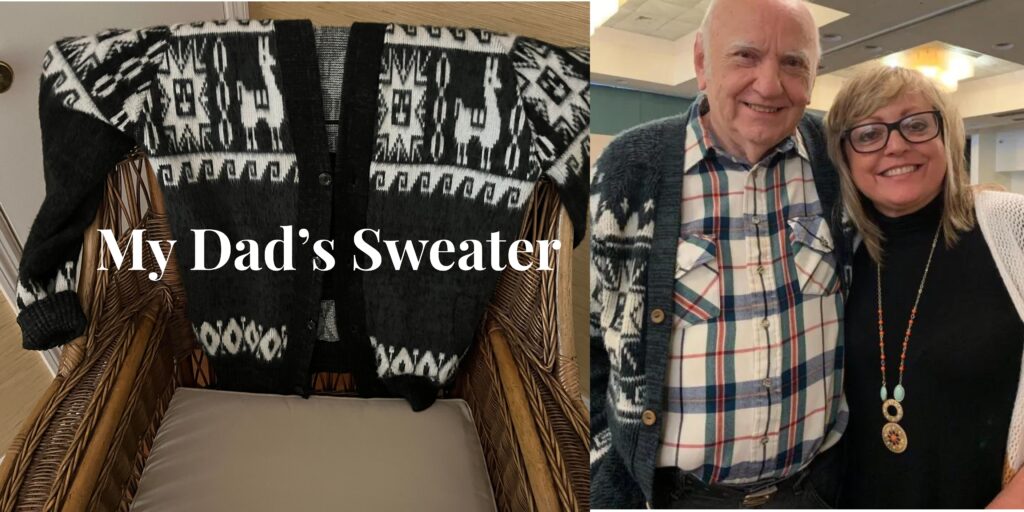
My Dad's Sweater
My dad’s sweater has traveled the world. Follow along as I weave God’s intricate details into our story.
When my husband, Jeff, was 19 or 20 years old, he traveled with his best friend Ray to Columbia, Kentucky, to visit Ray’s family. During their visit, Jeff never forgot the two-hour drive through endless cornfields and cow pastures. The small country town seemed so foreign to him that he thought to himself, “I’ll never be back here.”
Later, Jeff became a police officer, and a few years afterward, his best friend Ray did as well. Unbeknownst to Jeff, he would marry me, a woman whose parents were born and raised in Columbia, KY, and who had moved back there after retirement to build their dream home in the woods.
Never say never.
After my father lost my mother, we moved from Louisville, KY, to live with my dad in that little town called Columbia.
When he came home, he would hang his sweater on the stair railing. The winters in Kentucky can be brutal. One chilly morning, as I grabbed his sweater off the chair rail, Dad remarked, “Boy, you sure like my sweater.”
I replied, “I sure do! I love the llamas, and it’s warm and woolly. Who bought it for you?”
He said, “I got it on my missionary trip to Ecuador.”
As he talked about his mission trip, my husband and I started to inquire about the people, the culture, the poverty, the food, and what life was like there. Today, over half the nation is in dire poverty. My dad witnessed that poverty years ago and described it in vivid detail.
“Where did you sleep while there,” I asked?
As we talked, my dad traveled back in time to another life, one of many my dad lived. He described the city, and he mentioned that he had a roommate named Raymond, and they shared a bedroom while in Ecuador. He said, “I can’t think of his last name right now for nothing, but I can see his face plain as day. See, he was from right here in Columbia.”
Finally, the light bulb went off. “Page. Raymond Page!”
My husband said, “Raymond Page?”
“That’s my best friend, Ray’s, dad.”
My dad said, “Raymond page from Columbia, KY?”
“YES!”
We laughed! Come to find out. Our Heavenly Father gives winks. What a small world.
Back to the sweater in a moment.
My husband and I have had many of those aha moments. We were raised all our lives in the same church and never knew it. It was a small congregation that grew larger. A new location and a sanctuary with balcony seating.
One night, I asked him how old he was when he decided to follow the Holy One. I shared my own story of being five or six years old and realizing I had done something wrong. I had stolen a boy’s toy from down the street. It was a bouncy ball swirled with bright colors and brand new on the market in 1972. Oh, how it shined! Oh, how it bounced! I had it in my pocket during Sunday school. I had only owned it for one whole day, but I already felt some guilt, which was about to intensify.
The teacher had a large bun and used a vision board filled with felt cutouts to create wonderful stories and biblical lessons. That week’s lesson was on “Thou Shalt Not Steal.” You can imagine how I felt at that moment. I couldn’t wait to return the ball to my friend Curt, the boy I had taken it from. It was burning a hole in my pocket.
And who was sitting in class with me? Yep, my future husband. Like Raymond Page, we had come full circle.
One thing I’ve learned about objects, whether it’s a 25-cent bouncy ball that needs to be returned to its rightful owner or an antique, they either have a story or they don’t. Handling estates and death is never easy. And sometimes an item dear to you is also special to someone else. Unbeknownst to me, my dad’s sweater was one of those items. I had no idea someone else had their own story. That meant someone else loved my dad very much. It’s funny how objects can be sentimental and mean something to us, but will they mean anything 50 years later? Or even 20? Possibly not. Material objects can never truly bring us joy, but they can bring us memories or shame, like the bouncy ball.
So, after months of searching on eBay for a sweater from Ecuador, a men’s grayish blue with white lamas, I found a similar one, and I’m wearing it as I type this for Father’s Day-…my first without dad. It might not be the exact sweater my dad wore with Ray Page in Ecuador many moons ago, but it’s still comforting, and it reminds me of our time together.
What do you have that comforts you besides Pets or family?
What do you find comforting in your home? A particular coffee cup, a throw blanket, a unique book, or a painting? Never take the simple things for granted. After losing my home and life as I knew it, after a year of couch surfing, I hit my knees at the door of my tiny apartment in praise and gratitude. I set the thermostat on my perfect temperature, and in the morning, I made coffee and drank out of a cup my son made on a potter’s wheel in the tiniest space I’d ever lived, and that cup, although broken now, was a daily beauty until the accident. I was so upset. I can never get that cup back. But the son who made it for me, recently told me he was going to start doing pottery again when they move into a larger house. I just might get a new cup to hold while the sun comes up. While the dove’s coo. In the meantime, I have several favorite cups given by special friends.
I find comfort in other things—grandchildren, red wine, dark chocolate, and a good book. By the way, I write books if you’re interested. Wink– wink 🙂 You can find all my books HERE.
Blessings,
Tekoa
Gift boxes HERE

Are They Not Written in the Book?
When we read about the kings of Israel after their deaths, the Bible states, “Now the rest of the acts of _______ and all that he did, are they not written in the Book of the Chronicles of the Kings of Judah?” This implies that they are merely human—here are their accomplishments and failures. If you want to learn more, you can refer to the Chronicles.
I once reflected on this verse and inserted my own name. Not that I consider myself a king or queen, but because it resonated with me regarding our human frailty.
For instance, take Bonnie (Tekoa) Manning and all that she has done: her past filled with sins, shame, wrong choices, and mistakes, as well as the date of her rebirth and the beauty she has brought into the world. Yes, all of it is part of her story.
As stated in Isaiah 40:7, “The grass withers and the flowers fall when the breath of the LORD blows on them; indeed, the people are grass.” When a flower fades, we don’t resort to pumping the stem with Botox or paint to restore its vibrant petals. Instead, we allow it to return naturally to the earth from which it came.
The deeds of Solomon’s son, Rehoboam, both good and bad, are recorded in this book, allowing us to reflect on his leadership. In 1 Kings 14, we read that the people built high places for themselves, along with sacred pillars and Asherah poles. There were also male cult prostitutes in the land, and they acted wickedly, just like the other nations.
As we turn the page, we encounter another king, King Abijam, who also walked in sin. It’s important to note the reason he was given authority and a title: it was the same reason as the previous king’s—because of David. Our actions today impact our descendants and those around us, even after we’re gone.
Abijam became king over Judah. He reigned for three years in Jerusalem, and his mother’s name was Maacah, the daughter of Abishalom. He walked in all the sins of his father, committing the same offenses that had preceded him; his heart was not wholly devoted to the LORD his God, unlike his father David. However, for David’s sake, the LORD his God gave him a lamp in Jerusalem, to raise his son after him and to establish Jerusalem. This was because David did what was right in the sight of the LORD and had not turned aside from anything He commanded him throughout his life, except in the case of Uriah the Hittite. There was continuous war between Rehoboam and Jeroboam all the days of his life. (1 Kings 15:1-6)
The reference to “except in the case of Uriah the Hittite” highlights that David fell into adultery and had Uriah killed. Despite this, he was still known as a man after God’s own heart. He wrote words so powerful that we still meditate on, read, sing, and pray them today, even while being pursued by his enemies.
Peter is another example; he walked on water, laid hands on the sick, and vowed never to deny Yeshua, yet he did so three times. Despite his failure, he went on to become a great apostle.
Everything we do here, all the work of our hands, will one day come to an end. Each day we wake up, we are one day closer to death. Our lives are like a flower that fades quickly, and they tell a story.
My grandchildren will probably never know much about their great-grandmothers, Daisy and Nola, who have been gone for over 30 years. But Abba knows their stories—the good and the bad—along with everything they did and didn’t do during their time on Earth.
The Bible says, “Whatever you find to do with your hands, do it with all your might; for in Sheol, where you are going, there is no work or planning, knowledge, or wisdom.” (Ecclesiastes 9:10)
One day, on that Great Day, Paul and Yeshua said that the dead in Messiah would rise from the grave first. We wait for that day, but in the meantime, our lives are precious.
Paul also said, “Therefore, we do not lose heart. Though our outer self is wasting away, yet our inner self is being renewed day by day.” These bodies are fading fast and returning to dust; they are temporary dwelling places.
What we do while we are here— is it not recorded in a book? Our slander, gossip, suspicion, idols, and the time we waste that He has given us, along with our jealousy, anger, and lust, are all noted, just as much as our good deeds— our almsgiving, prayers, helping widows, the poor, and orphans, and our love for humankind. We should also strive to love ourselves with all our flaws and press on toward the mark of the high calling in the Messiah— that is the HIGHEST CALLING!
It’s not about the NBA, Hollywood, a best-selling book, the number of followers, the esteem of a man, or becoming a rock star. There is a Star Giver in the heavens who created those lights in the sky. What a blessing! He gave us the moon and all the heavenly hosts that impart wisdom and knowledge. We look up towards the heavens and continue walking out our salvation with fear and trembling.
He collects our tears in His wineskin, and one day the book about us will be closed. In the meantime, let’s “Make the most of our story!” It is in the background, where no one sees, that our prayers are offered in private, where hands wash children, prepare meals, and embrace loved ones.
Now, the rest of the acts of ______ and all that he or she did, are they not recorded? What will be written about us?
Blessings,
Tekoa
The Komondor & The Great Shepherd
We humans, can be just like these dogs.
These things require tender hearts and, honestly, time.
There is a cost to being in any form of leadership.
Kom’s eat, sleep, and stay right with the flock of sheep, but if the flock strays too far away, they become a target.
Shepherds need care, too! They are often exhausted from all the burdens.
Wild beasts are alive and preying everywhere today.
The coyotes learned to attack the flock when the dog was not present.
Shepherds and sheep are frequently mentioned in the Bible. Moses, after fleeing Egypt, helped Jethro’s daughters water their flocks, standing up against bullies who tried to prevent them from doing so. Both Yeshua and Moses acted as protectors, similar to the Kom, who guard their owners from predators. Following the golden calf incident, Moses showed his commitment by willing to sacrifice himself for his people.
A true shepherd after Adonai’s heart speaks like Moses and acts like David. David recounted, “Your servant has been tending his father’s sheep… whenever a lion or a bear came and carried off a lamb, I went after it, struck it down, and delivered the lamb.” (I Samuel 17:34-35, BSB). David bravely defeated both the lion and the bear.
In an experiment at Texas A&M, dogs protected sheep by staying close and barking at dangers. However, these actions did not deter predators like coyotes. In 79 out of 153 interactions, sheep sought out the dogs, who effectively stood between the sheep and the coyotes or chased them away. Sheep were never attacked while with a dog, and the dogs became attached to a specific area, often near the gate. This reflects the idea that shepherds must stay close to the Messiah for the protection of their flock, as stated by Yeshua: “I am the gate” (John 10:9).
“Truly, truly, I tell you, whoever does not enter the sheepfold by the gate, but climbs in some other way, is a thief and a robber. But the one who enters by the gate is the shepherd of the sheep. The gatekeeper opens the gate for him, and the sheep listen for his voice. He calls his own sheep by name and leads them out. When he has brought out all his own, he goes ahead of them, and his sheep follow him because they know his voice. But they will never follow a stranger; in fact, they will flee from him because they do not recognize his voice.” (John 10:1-5)
The sheep learn to recognize the voices of both the Koms and the coyotes. John C. McGrew and Cindy S. Blakesley observed an important aspect of sheep behavior in their study:
“Our study showed that the sheep learned to avoid the coyote by staying close to or going with the dog. In over half of the coyote attacks, the flock either stayed with or ran to the dog for protection. As the study progressed, the sheep established their bedding area near the gate, spending more time there. They also increased the dogs’ effectiveness by alerting them to the presence of the coyote. While Komondorok have good olfactory sense and visual acuity, they often rely on the sheep to detect the coyote before they do.”
Shepherds need to listen to their flocks.
For younger servants in training, I’d like to share one last story about two of the nine Koms. The study indicated that female Koms generally make better watchdogs.
On the evening of Day 18 of her trial, Babe actively defended her sheep from a coyote for over two hours. The coyote approached the flock at least ten times during this period, and Babe successfully repelled it each time. However, the following day, the coyote managed to separate the sheep from Babe and drive them away from the gate. She made no attempt to follow or chase the coyote, likely because the sheep had quickly left her preferred area.
Aggressiveness increased among some of the dogs as the trial progressed. Cecily initially ran from the coyote during her first encounter (Day 8). By Day 10, she chased the coyote away from the flock, but ran when it confronted her. Finally, by Day 15, she consistently chased the coyote away several times without retreating. Babe did not chase after the coyote once the sheep chose to leave her area. Cecily learned that when a coyote challenges you, it’s important not to run away in fear.
Sometimes, mentors, teachers, and protectors need to be authoritative to safeguard vulnerable lambs. There is much we can learn about ourselves by observing these animals and those who protect them. Yeshua said, “My sheep know my voice, and they will not follow another.” Can you recall a time when you followed someone else’s voice instead of His? How can we become more attuned to hear His voice?
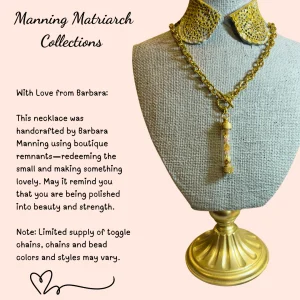
New Gift Shop is open: HERE
New Releases are available HERE
"Avoid people who are close to those who dislike you.” - Dr. Rahb
“Avoid people who are close to those who dislike you.” – Dr. Rahb
Why is this important?
To paraphrase: “Hey, Jacob, Laban’s heart is not right towards you, and neither are the hearts of his sons. It’s time to leave…” (Genesis 31).
God does not instruct Jacob to try to smooth things over with Laban, turn the other cheek, hold family counseling sessions, or seek reconciliation. Jacob is fully aware of how Laban has treated him repeatedly, and God is aware too! So, Jacob decides to leave, and God even gives Laban a dream, warning him, “Be careful not to say anything to Jacob—either good or bad.”
We can either stay too long or leave too early. These environments can harm our health, disrupt our nervous systems, and diminish our self-worth. Social media can often be a toxic environment.
Genesis 31:2 states, “And Jacob saw the countenance of Laban, and indeed it was not favorable toward him as before.” The term “countenance” refers to a person’s face.
In Hebrew, the word for “face” is paniym, which is plural and literally means “faces.” This term encompasses more than just our appearance; it reflects all aspects of our identity. With this understanding, we can see that Jacob recognized Laban’s disdain for him.
When someone’s countenance is no longer favorable toward us, it is best to leave them in peace. If you feel this way about me, please do the same.
If a person is watching someone solely to gather information to fuel gossip or to show a lack of respect and honor, may Abba deal with all of us! I pray that we have the strength to distance ourselves from such individuals. If their close friends do not like us, avoid…avoid.
While some might refer to this behavior as the “evil tongue,” Paul directly calls out certain individuals.
In 2 Timothy 4:14, Paul writes, “Alexander the coppersmith did me great harm; the Lord will repay him according to his deeds.”
In 1 Timothy 1:20, he mentions, “Of whom are Hymenaeus and Alexander; whom I have delivered unto Satan, that they may learn not to blaspheme.”
In another instance, Paul confronts a high priest:
“At this, the high priest Ananias ordered those standing near Paul to strike him on the mouth. Then Paul said to him, ‘God will strike you, you whitewashed wall! You sit here to judge me according to the law, yet you yourself violate the law by commanding that I be struck.’”
As we enter a season of introspection, remember that every day is an opportunity for healing and reflection. Be cautious about attempting to fix situations that won’t ultimately benefit you, as they may only lead to more harm, more tar baby tar, more stirring the pot or conflict.
What is a Tar Baby?
the best-known version of the tar baby story was published in 1880 by Joel Chandler Harris in Uncle Remus: His Songs and His Sayings, and popularized in Song of the South, the 1946 Disney movie.
Author Bryan Wagner explores how the tar baby story, thought to have originated in Africa, came to exist in hundreds of forms on five continents. Examining its variation, reception, and dispersal over time, he argues that the story is best understood not merely as a folktale but as a collective work in political philosophy.
Here is the story: Brer Rabbit
Wait for the Holy Spirit’s guidance or you might end up in a sticky mess. Not everyone in your life is for you; some may be there to undermine you and the assignments that Abba has for you. They stand against your “paniym” FACES!